Veterans Across America Virtual Chapter Meeting

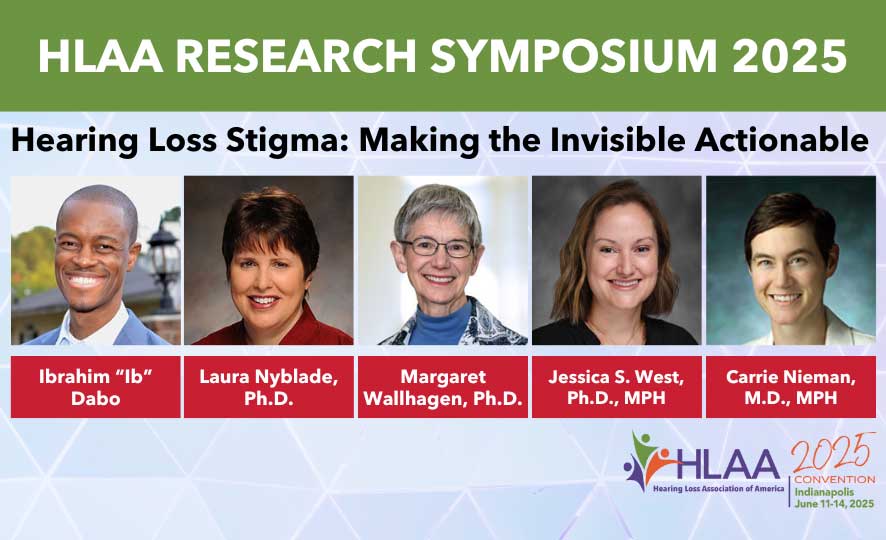
Many people with hearing loss wait seven years or longer to seek treatment, or never get treated at all. What role does stigma play in this dynamic and is the public’s perception of hearing loss improving over time? What can people with hearing loss do to rise above experiences of stigma in their own lives?
At the Hearing Loss Association of America (HLAA) annual convention in June 2025, a panel of top researchers in this field engaged the audience with consumer-friendly presentations that inspired curiosity and questions.
Key Takeaways:
Watch the recordings, access slide presentations and read about the panelists below:
 Ibrahim “Ib” Dabo
 Commissioner for the Georgia Commission for the Deaf or Hard of Hearing
As a leadership and resilience coach, keynote speaker and advocate, Ib empowers individuals to rise above challenges, embrace authentic leadership and break through barriers for personal and professional transformation. His career spans journalism, communications, IT and public service, where he has led international teams through crises and driven meaningful change. Ib’s journey—from refugee to hearing loss advocate and global team leader—gives him a unique and powerful perspective. A former international journalist and Board Member for the Hearing Loss Association of America (HLAA), he is committed to fostering inclusivity and supporting individuals with hearing loss.
 Laura Nyblade, Ph.D.
Fellow and senior technical advisor on stigma and discrimination in the division for global health, RTI International
A public health expert specializing in research on stigma, Dr. Laura Nyblade has over two decades of experience in health research, instrument development, program design and evaluation, intervention development and implementation of research findings. She brings her expertise to address conditions with a longer history of stigma research and intervention (e.g., HIV) to newer conditions (e.g., hearing loss). She has co-led a sub-working group on hearing loss stigma under the Lancet Commission on Hearing Loss, which hs developed a guiding framework for action on stigma measurement and reduction. She also published a suite of measures for hearing loss stigma in Ghana and the U.S., which exploring the intersection of stigma and ageism for people with acquired hearing loss.
 Margaret Wallhagen, Ph.D., GNP-BC, AGSF, FGSA, FAAN
Professor, Department of Physiological Nursing and director, Center of Gerontological Nursing Excellence, University of California, San Francisco (UCSF).
Since joining the UCSF faculty in 1988, Dr. Wallhagen has taught gerontological nursing at both the masters and doctoral level. Meg’s research focuses on how older individuals and their families manage chronic illnesses and changes that occur with age, with a recent emphasis on the impact of hearing loss on older adults. Her work has included a four-year longitudinal study on the experience of hearing impairment in older adults and their partners, and a study on the comparative effectiveness of three protocols to enhance the integration of hearing screening and education into primary care settings. Her current research is exploring the impact of hearing loss in the context of serious illness and the provision of palliative care.
 Jessica S. West, Ph.D., MPH
Medical sociologist and faculty at Duke University School of Medicine, Department of Head and Neck Surgery & Communication Sciences
Dr. West is a medical sociologist specializing in research on hearing loss, aging and health disparities over the life course—studying how hearing loss affects people’s health and well-being throughout their lives. She is particularly passionate about researching the stigma associated with hearing loss and hearing devices and identifying ways to reduce it. Her interest in this research is personal, as someone with congenital, bilateral, moderate-to-severe sensorineural hearing loss who has worn hearing aids since the age of 17. Dr. West’s research, which leverages both population-level data and electronic health record data, has appeared in the Journals of Gerontology, Social Science & Medicine, Ear and Hearing and other leading journals in medical sociology, hearing and aging research.
 Carrie Nieman, M.D., MPH
Associate professor, Johns Hopkins Medicine Department of Otolaryngology-Head and Neck Surgery
Dr. Nieman is an associate professor in the division of otology, neurotology and skull base surgery in the Johns Hopkins Department of Otolaryngology-Head and Neck Surgery and also serves on the HLAA Board of Directors. Her clinical practice is dedicated to the medical and surgical management of hearing loss and Eustachian tube disorders. Dr. Nieman’s research is directed at understanding and addressing hearing health disparities among older adults, particularly among vulnerable populations. Her work focuses on the development and implementation of innovative, community-delivered approaches to affordable, accessible hearing care.
Watch the Q&A panel discussion moderated by Dr. Nieman
HLAA’s Research Symposia are supported, in part, by a grant from the National Institute on Deafness and Other Communication Disorders, National Institutes of Health (Award Number R13DC017913).
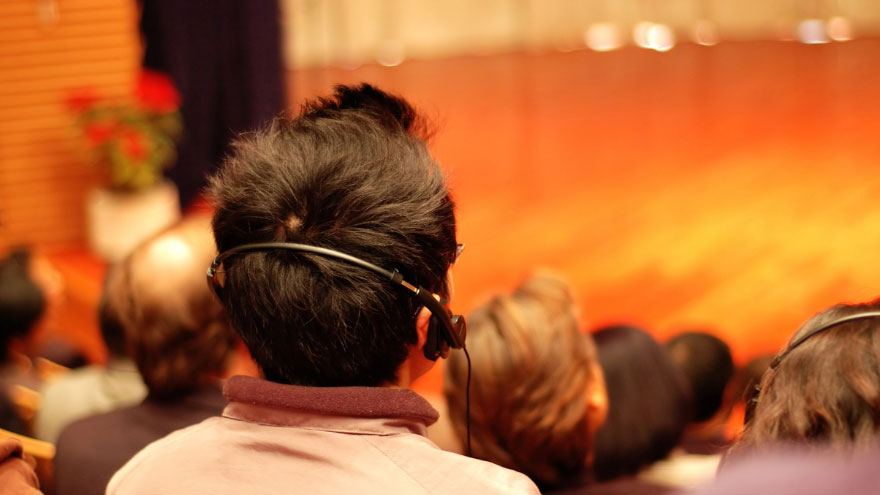
Your feedback matters! Use this form to educate venues and event organizers about whether their assistive listening offerings are effective.

A simple guide for what to do before, during and after an event to make sure you get the best listening experience from an event or venue.
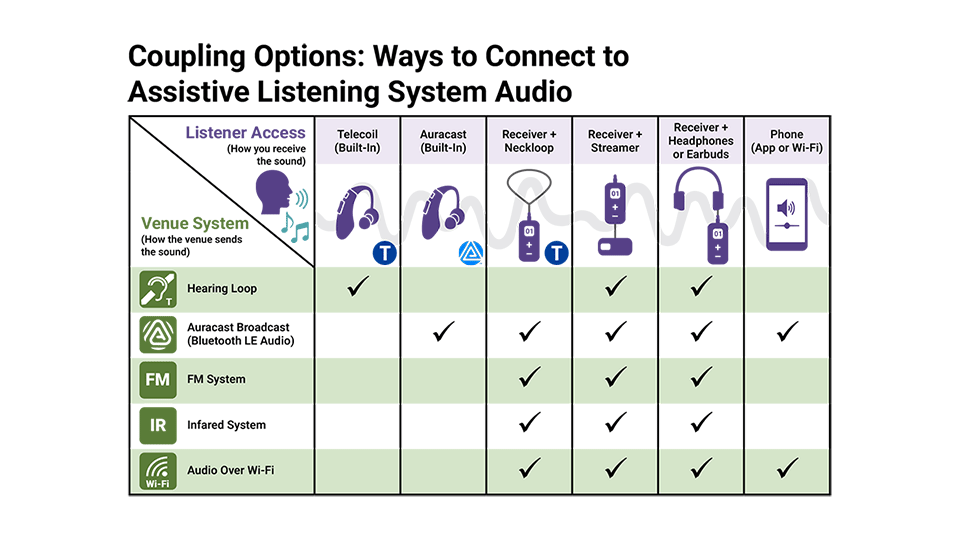
A simple chart explaining which devices can connect to different assistive listening systems.
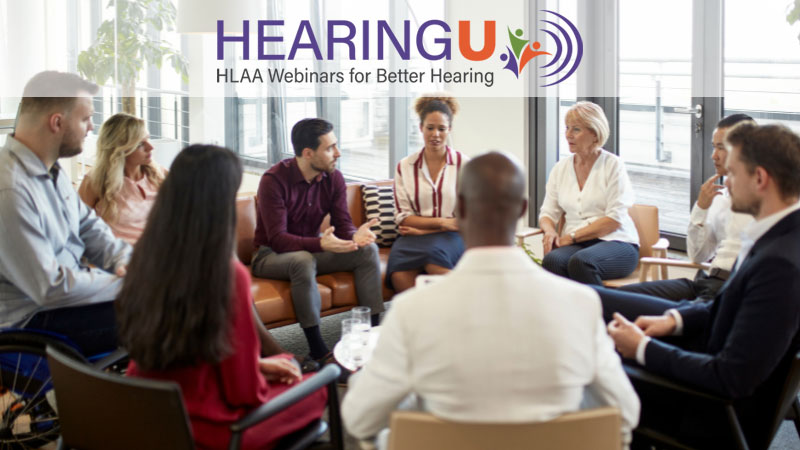
Two behavioral health experts examine how stigma may prevent people with hearing loss from prioritizing their mental health and substance use issues.
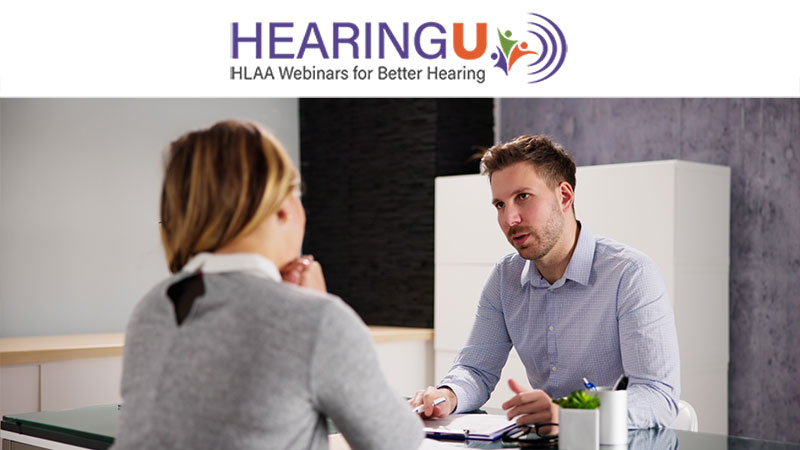
Learn how hearing loss shapes workplace identity, disclosure and tech use—plus insights from HLAA panelists on building inclusive workplaces.

Learn how to create more inclusive workplaces and navigate fast-moving, high-noise environments from our panel of professionals with hearing loss.
A professional panel discusses how Auracast broadcast audio may impact listening in public spaces and why hearing loops remain essential assistive technology.
A panel of experts explores technology, tips, and tools that empower employees with hearing loss and foster inclusion in the workplace.

Discover how some hospitals are making health care safer and more accessible for patients with hearing loss—and how you can advocate for yourself or your loved ones.