
Auracast Broadcast Audio
Key Takeaways:
- Auracast Broadcast Audio is a wireless sound transmission technology based on Bluetooth LE Audio. Broadcasts can come from a wide array of enabled devices, like PA systems or televisions, and be accessed by an increasing variety of compatible devices.
- One defining feature of Auracast is that it allows a single device to broadcast to multiple receivers. It does this without requiring devices to pair like they would with classic Bluetooth.
- Auracast deployments in public venues can meet or exceed legal and technical standards set by the Americans with Disabilities Act (ADA).
- Widespread adoption will take time, but some assistive devices are already Auracast-enabled and more venues worldwide are beginning to use the technology.
What is Auracast?
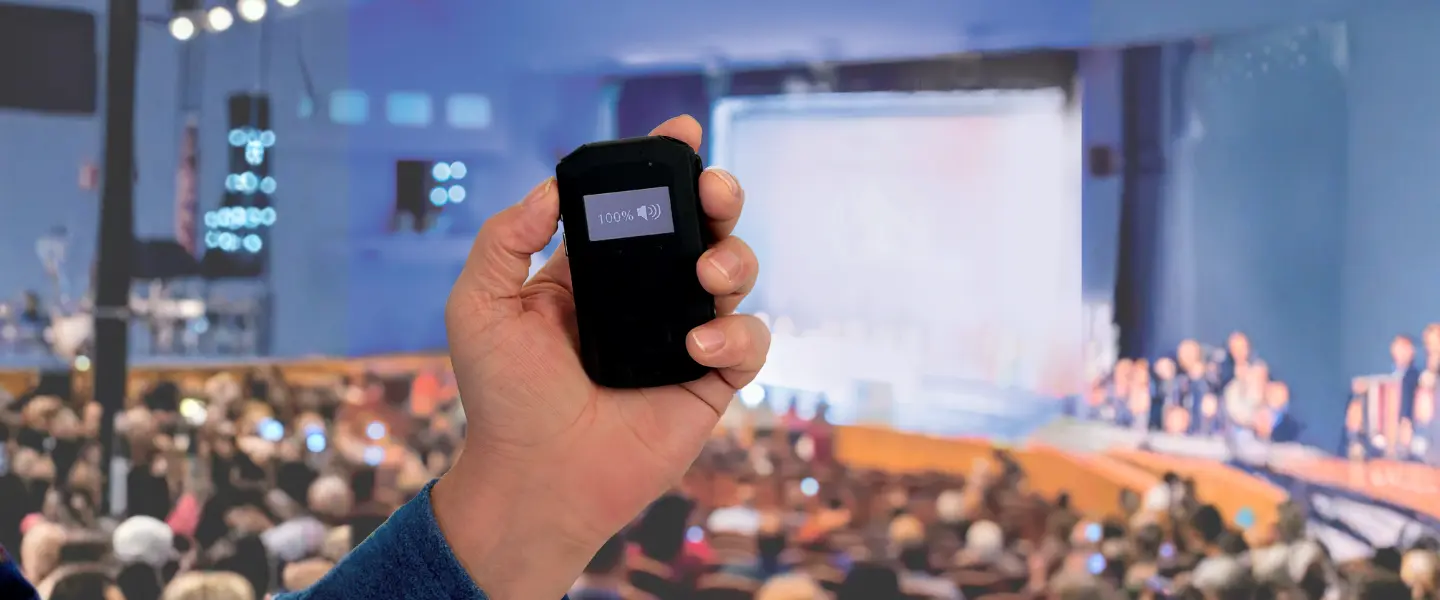
Auracast Broadcast Audio is a technology that allows one device to transmit sound wirelessly to multiple people in range with compatible listening devices, or receivers. Multiple audio streams can broadcast simultaneously, providing the primary audio content along with additional content such as language translation or audio description for people with vision loss. Users select the audio stream that best meets their needs.

Illustration of an Auracast broadcast audio transmission in a public venue to multiple receivers (earbuds and hearing devices). ©Bluetooth SIG
How does Auracast work?
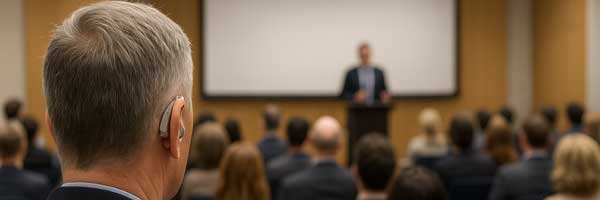
Auracast transmitters can be used in different ways. In meeting rooms and theaters, the transmitter may be connected to the public address system. In other venues, like a restaurant or airport, the transmitter may be built directly into a device, such as a television. The sound from these audio sources is broadcast over one or more streams using Bluetooth LE Audio.
People within range of the broadcast can choose to listen to a particular audio stream with their Auracast-enabled hearing devices or wireless headphones/earbuds. Audio stream selection works similarly to connecting to a Wi-Fi network. Another device, like a smartphone or smart watch, is needed to assist with selecting the audio stream, while the audio itself is transmitted directly to the compatible devices.
What makes Auracast different?
Auracast uses a new audio format that delivers clearer sound quality with less delay than classic Bluetooth. It also doesn’t require a user to pair their device to access the Auracast audio stream. Supporting content, such as simultaneous language translation or audio descriptions, can be provided as different streams from the same broadcasting device.
Because Auracast can stream audio directly to compatible hearing aids, cochlear implants and headphones/earbuds, it can make public listening easier and more discreet for people with hearing loss who use hearing devices. At venues that implement Auracast for assistive listening, individuals with Auracast-enabled hearing devices can receive the audio directly. This would offer an alternative to checking out, wearing and returning extra equipment. However, Auracast receivers, along with neckloops or headphones, will be required to connect with hearing devices that are not yet Auracast-enabled.
Auracast and the Americans with Disabilities Act
Since awareness and use of Auracast has grown, so have questions about whether it complies with Americans with Disabilities Act (ADA). To account for the ever-changing tech landscape, the ADA does not specify particular assistive hearing technologies as compliant or not. Rather, it requires venues subject to the ADA to provide an assistive listening system that meets a set of legal and technical standards.
Simply put, there is no such thing as an ADA-compliant assistive listening technology. Venues can meet their ADA obligations using a whole host of technologies—including Auracast. The key question is always whether their deployment of whatever technology they choose meets the ADA’s legal and technical standards.
The confusion around Auracast’s ADA compliance may stem from the 2010 ADA Standards for Accessible Design, which list induction loop, infrared and FM assistive listening systems as examples of assistive listening technologies that venues can deploy. This list is not exhaustive, nor does using one of these technologies bring a venue into automatic compliance with the ADA. Just as an improper deployment of infrared will not comply with the ADA, a thoughtful deployment of Auracast can meet or exceed the ADA’s requirements.
What’s next for this technology?
Several hearing device manufacturers offer models that are Auracast-enabled, and places around the world are starting to install Auracast broadcast audio systems. While the number of venues and hearing device manufacturers implementing Auracast is expected to increase, the timeline for widespread adoption of the technology is uncertain. It’s anticipated that existing assistive listening systems, such as hearing loops, FM, infrared (IR) and Wi-Fi, will continue to be used alongside Auracast for some time.
A new international standard for Auracast venues is expected by late 2027. Its goal is to ensure that systems perform properly and provide consistent experiences within and across locations.
What should you consider when purchasing new devices?
Some consumers may hesitate to upgrade to new hearing devices with this technology until a wider selection of compatible products is available. Others who prefer to update their hearing aid or cochlear implant processor sooner should be sure to ask their provider for a model that is both Auracast-enabled and contains a telecoil. This ensures continued access to hearing loops and other assistive listening technologies.
An important note for consumers: Auracast broadcasts can transmit audio streams at different quality levels. Higher-quality audio streams deliver rich sound for music and entertainment, but use more power and have a higher latency (delay). Standard-quality audio streams, which focus on speech clarity, low latency and battery efficiency, are the level used by hearing aids and cochlear implants. Because these two types of audio quality aren’t interchangeable, a product that only broadcasts higher-quality audio streams won’t be compatible with hearing devices. Make sure you know what a device is capable of before buying.

Look for universal assistive listening technology signs indicating Auracast availability.
An important note for facilities: Public venues installing Auracast should confirm their systems are configured to broadcast a standard-quality audio stream so patrons with hearing aids and cochlear implants can reap the benefits of the venue’s investment. Be sure to post visible signage with a global communication accessibility symbol, like the one pictured here.
FAQs
Auracast Broadcast Audio is a wireless sound transmission technology based on Bluetooth LE Audio that allows one device to transmit sound wirelessly to multiple compatible listening devices within range, including Auracast-enabled hearing aids and cochlear implants.
In places like theaters, airports or places of worship, Auracast transmitters connect to sound sources and broadcast audio streams over Bluetooth LE Audio. Users within range can select the preferred stream using their smartphones or smart watches, which is then received by compatible hearing devices or earbuds.
To account for the ever-changing tech landscape, the Americans with Disabilities Act (ADA) does not judge assistive hearing technologies as compliant or not. Rather, it requires venues subject to the ADA to provide an assistive listening system that meets a set of legal and technical standards. Venues can meet their ADA obligations using a whole host of technologies, including Auracast. The key question is always whether their deployment of whatever technology they choose meets the ADA’s legal and technical standards.
Auracast offers clearer sound with less delay, can broadcast multiple content streams simultaneously and doesn’t require pairing to connect like classic Bluetooth. This can make assistive listening in public more discreet and accessible for users with hearing devices.
Widespread adoption will take time, but currently some hearing devices are Auracast-enabled, and more venues are starting to install the technology. A new international standard is expected by late 2027 to ensure consistent performance across locations.
Consumers should ensure their hearing aids or cochlear implants are Auracast-enabled and include a telecoil, so they can continue to utilize established assistive listening systems such as hearing loops during the transition period.
To determine if your hearing aid or cochlear implant is compatible with Auracast, look at the product documentation or packaging, or search online to check whether your specific model is listed as Auracast‑enabled (can receive broadcast audio now) or Auracast‑ready (will be compatible after a future software/firmware update). You can also ask your hearing device provider or contact the manufacturer’s customer support.