Veterans Across America Virtual Chapter Meeting


This webinar continued a series by HLAA’s Task Force on Employment. The Job Accommodation Network (JAN) is the leading source of free, expert and confidential guidance on job accommodations and disability employment issues. Serving customers across the United States and around the world for more than 35 years, JAN provides free one-on-one practical guidance and technical assistance on job accommodation solutions, Title I of the Americans with Disabilities Act (ADA) and related legislation and self-employment and entrepreneurship options for people with disabilities. In this session, Teresa Goddard, JAN’s lead sensory consultant, addressed the following questions:
Note: The views expressed in this webinar do not imply an endorsement or recommendation by HLAA.
 Teresa Goddard
Sensory Team Lead Consultant, Job Accommodation Network
Teresa Goddard joined the Job Accommodation Network (JAN) staff as a program assistant in March 2008, joined the JAN Motor Team as a consultant in August 2008 and then transitioned to JAN’s Sensory Team. Teresa now provides expert level consultation and team leadership as a lead consultant on JAN’s Sensory Team. In this role, Teresa fields questions from employees and employers regarding their rights and responsibilities under the Americans with Disabilities Act (ADA) and assists in identifying accommodation solutions for individuals with sensory impairments.
Teresa’s professional experience includes work as an educational speech-language pathologist and as an English as a Foreign Language (EFL) instructor in Aichi Prefecture, Japan, where in addition to classroom teaching, she led continuing education workshops on collaborative instructional techniques and cross-cultural understanding.
Teresa earned a master’s degree in Speech Pathology and a bachelor’s degree in Speech Pathology and Audiology from West Virginia University (WVU). Teresa’s research interests include assistive technology, trauma informed practices and cross-cultural perspectives on disability services.
 David Baldridge, BGS, MBA, Ph.D.
Professor, Oregon State University
David Baldridge, Ph.D., is a deafened, cochlear implant user. Dr. Baldridge is a long-time HLAA member, and a member of the HLAA Task Force on Employment. He is a Toomey Faculty Fellow and professor of management at Oregon State University. He has researched the workplace experiences of people with hearing loss for more than 20 years, published more than 25 articles and book chapters and made more than 100 conference and workshop presentations. His research has appeared in Academy of Management Review, Strategic Management Journal, Journal of Management, Human Relations, Human Resource Management, Journal of Occupational and Organizational Psychology, Journal of International Business, Oxford Press and NTID Press books, and other leading management outlets.
Please see his website for more information.
 Kelly Tremblay, Ph.D.
Clinical Audiologist, Tenured Professor
Kelly Tremblay, Ph.D., has a 30-year history of serving and advocating for people with hearing loss as a clinical audiologist and tenured professor. In addition to being a member of the HLAA Board of Directors, she leads the HLAA Task Force on Employment. Dr. Tremblay retired from the University of Washington in 2019, where she taught audiology students how to prevent, assess and treat hearing loss, and where she led a research team as the director of the brain and behavior laboratory. She remains very active by judging research applications for the National Institutes of Health, teaching at multiple universities as an adjunct and affiliate professor, and serving as an adviser to multiple government and nonprofit organizations, including the World Health Organization. Because she loves mentoring, she extends expertise beyond the walls of academia and serves as an executive coach for those who are committed to accessibility and healthy aging.
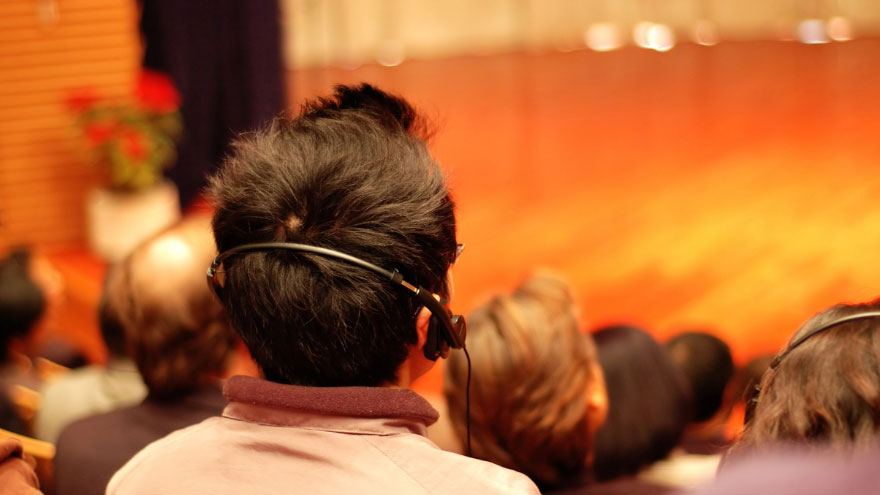
Your feedback matters! Use this form to educate venues and event organizers about whether their assistive listening offerings are effective.

A simple guide for what to do before, during and after an event to make sure you get the best listening experience from an event or venue.
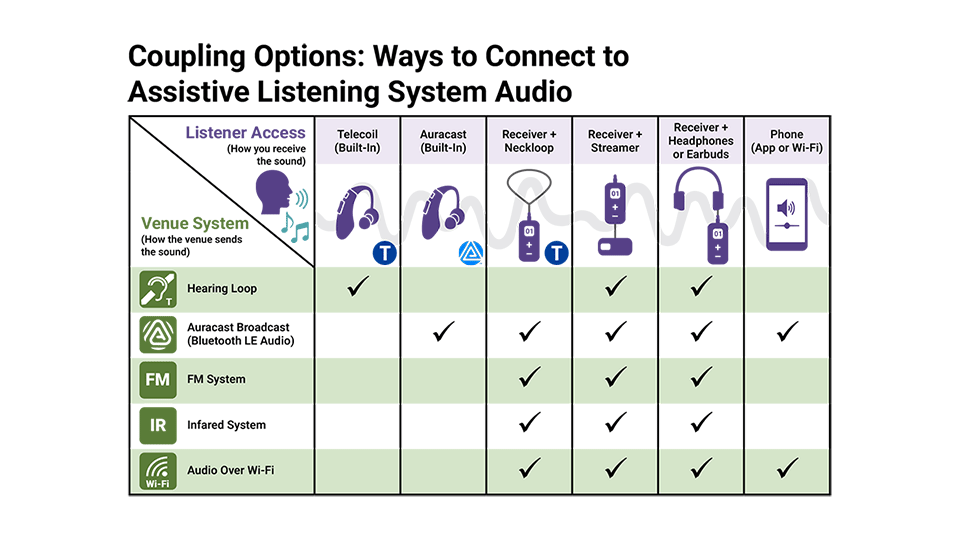
A simple chart explaining which devices can connect to different assistive listening systems.
Two behavioral health experts examine how stigma may prevent people with hearing loss from prioritizing their mental health and substance use issues.
Learn how hearing loss shapes workplace identity, disclosure and tech use—plus insights from HLAA panelists on building inclusive workplaces.

Learn how to create more inclusive workplaces and navigate fast-moving, high-noise environments from our panel of professionals with hearing loss.
A professional panel discusses how Auracast broadcast audio may impact listening in public spaces and why hearing loops remain essential assistive technology.
A panel of experts explores technology, tips, and tools that empower employees with hearing loss and foster inclusion in the workplace.

Discover how some hospitals are making health care safer and more accessible for patients with hearing loss—and how you can advocate for yourself or your loved ones.