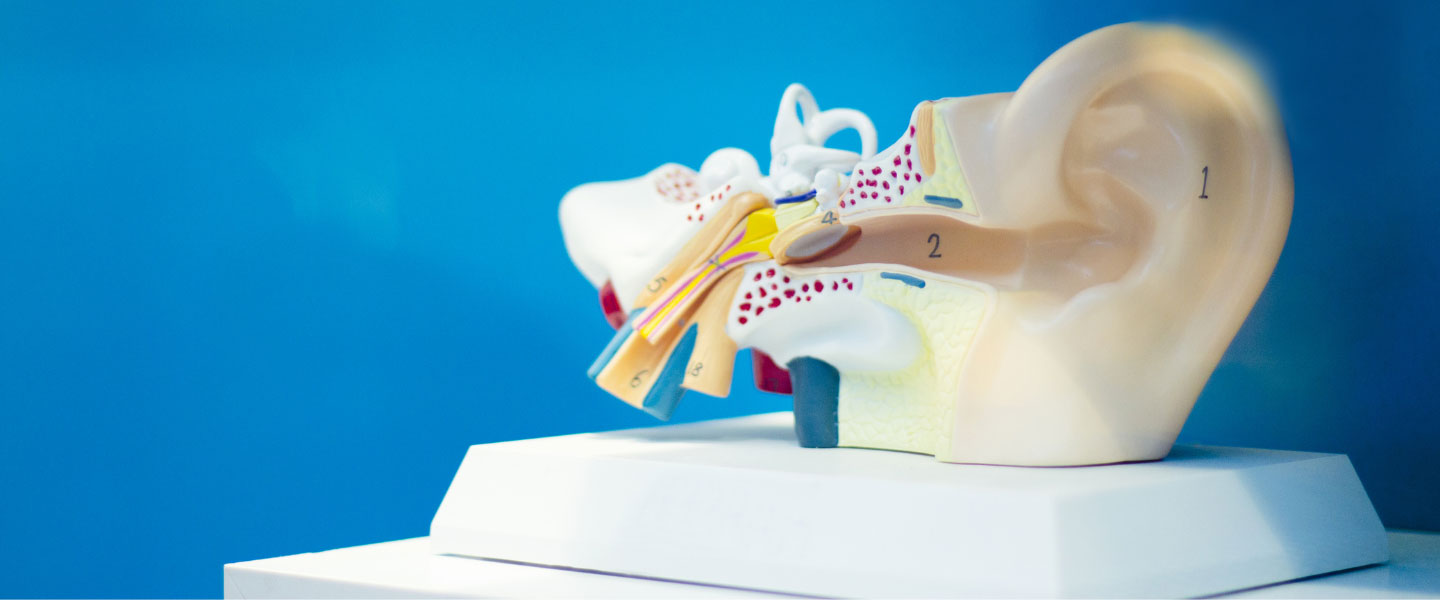
What is Auditory Neuropathy Spectrum Disorder (ANSD)?
Auditory neuropathy spectrum disorder (ANSD) is a rare hearing condition caused by damage to the inner ear or auditory nerve disrupting the signal between the ear and the brain. Although sound can be heard by those with this condition, spoken words may not be understandable. While there is no cure, some cases may improve on their own.
Causes and symptoms of ANSD
Most often, this condition is present at birth or immediately following, caused by a range of health problems. ANSD can also be genetic or result from trauma or disease. Its effects on hearing vary from mild to profound hearing loss, with symptoms appearing at any age.
Children with ANSD can experience challenges with speaking, respond inconsistently to speech or have trouble understanding language. A child’s hearing may appear to change daily or even hourly and be particularly difficult in noisy places. Fortunately, treatments and devices are available to help children develop strong communication skills. Early diagnosis and treatment are key, since a delay of speech and language learning due to hearing loss, from as young as six months of age, can have a lifelong impact.
How is ANSD diagnosed?
ANSD may be diagnosed by a pediatrician, hearing disorder specialist (audiologist) and/or an ear, nose and throat doctor (ENT), also called an otolaryngologist.
Diagnosis requires both a standard, otoacoustic emission (OAE) test that checks for inner-ear hearing function, and an auditory brainstem response (ABR) test. Other methods sometimes used include middle ear muscle reflex (MEMR) and cochlear microphonic (CM) tests. Infants are tested by non-invasive means, generally with a small probe or microphone inserted into the ear canal while the child is asleep.
If ANSD is diagnosed, additional tests may be ordered, including:
- Neurologic testing to determine if other nerve problems are present
- Magnetic resonance imaging (MRI), which detects the presence or absence of hearing nerves and other inner ear conditions
- Vision testing from an eye doctor, since ANSD can be linked with vision problems
- Genetic testing may be needed to determine if ANSD is an inherited condition
How is ANSD treated?
A medical team for someone with ANSD may include an ENT, audiologist, neurologist, speech-language therapist, genetic counselor and education specialist. While ANSD is not curable at this time, a combination of auditory training, therapy and listening devices—such as hearing aids (HA), frequency modulation (FM) systems or cochlear implants (CI)—can help improve hearing and speaking skills.