Flying for the Holidays?
Air travel this time of year is always challenging, especially for passengers with hearing loss. Check out our helpful strategies, advocate for your rights and learn a new way to file complaints with the Department of Transportation.
By HLAA Director of Public Policy Neil Snyder

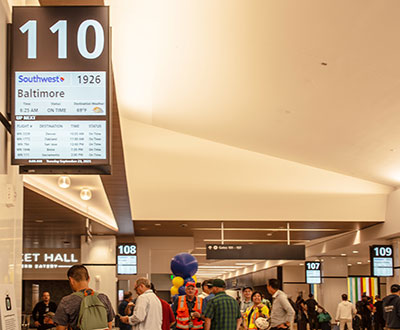
Airport boarding gate display sign with flight information. ©San Diego International Airport
The holiday season brings joy, family reunions and often a hectic trip through crowded airports. For travelers with hearing loss, the risk of missing important information due to muffled announcements is just one more obstacle to navigate in addition to long lines, gate changes and flight delays.
Airport boarding gate display sign with flight information. ©San Diego International Airport
Following these eight practical strategies can ease your travels and ensure smoother, safer flights.
-
Book Early for Audio-Friendly Seating
Book tickets far in advance so you can select seats near the front, where it’s easier to hear flight attendants.
-
Self-Identify at Every Stage
Indicate your hearing loss while buying your ticket, at security, at the gate and on the plane, to ensure staff can provide the support you need. Tell gate agents you’ll need boarding updates in writing or visually and remind them if necessary.
-
Use Airline Apps and Text Alerts
Winter storms and heavy traffic often mean delays. Most airlines send push notifications about gate changes or cancellations through their apps—install the app on your mobile device for updates.
-
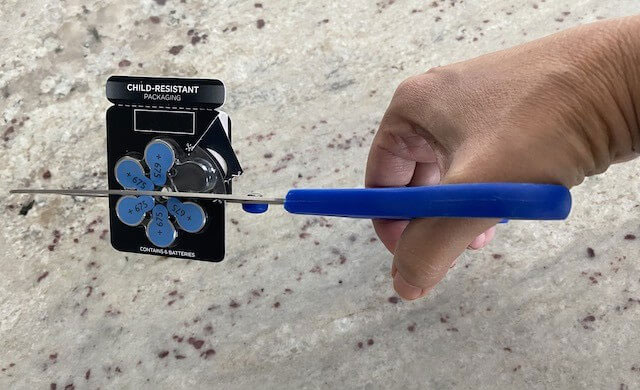
Pack Smart for Your Devices
Bring chargers, power banks and extra batteries for hearing aids and cochlear implants. A speech-to-text app or remote microphone may help with conversations in noisy terminals.5
-
Arrive Early and Request Preboarding
The holidays mean fuller flights and more chaos, so plan an early arrival to get through security without pressure. Preboarding your plane lets you settle in and ensure that you hear or read crew instructions clearly.
-
Know Your Options Onboard
Many U.S. airlines offer closed-captioned safety videos and in-flight entertainment, printed safety instructions and front-of-cabin or adjacent seating to accommodate interpreters or companions. Use them each as needed.
-
Use the Airport’s Hearing Assistance Resources
Some airports now feature hearing loops or visual paging systems. Research ahead of time to learn where the tools are located. Many airports also participate in the Sunflower Lanyard program, which allows passengers to silently signal a hidden disability like hearing loss. You can typically request a lanyard at airport information centers.
-
Fly Off-Peak with a Companion
Try to plan your flights to avoid high-demand travel dates and times. If possible, traveling with a hearing friend or family member can reduce stress and anxiety.
Holiday travel can test anyone’s patience, but if you prepare and self-advocate, it doesn’t have to be overwhelming. With these tips, you’ll spend less time worrying about airport hassles and more time enjoying the holidays with family and friends.
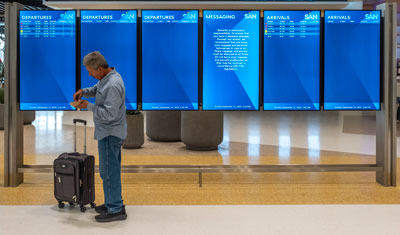
Passenger in front of an airport flight board with visual messaging screen. ©San Diego International Airport
Knowing your rights before you travel helps avoid miscommunications at the busiest time of year for airports. All U.S. airlines must follow the Air Carrier Access Act (ACAA), which protects passengers with disabilities, including hearing loss. This milestone legislation was established in 1986 and ensures that air travel is accessible and non-discriminatory for people with disabilities, by requiring air carriers to accommodate their needs.
In 2022, the Department of Transportation (DOT) introduced the Airline Passengers with Disabilities Bill of Rights, which was supported by the Hearing Loss Association of America (HLAA) and other advocacy organizations. It includes provisions for accessible flight and safety information, preboarding and seating accommodations and the right to be treated with dignity and respect, among others.
Congress recently passed the Federal Aviation Administration FAA Reauthorization Act of 2024, requiring enhanced accommodations by September 2028, including fully accessible announcements, in-flight entertainment captioning and enhanced digital accessibility on airline websites and kiosks.