Veterans Across America Virtual Chapter Meeting

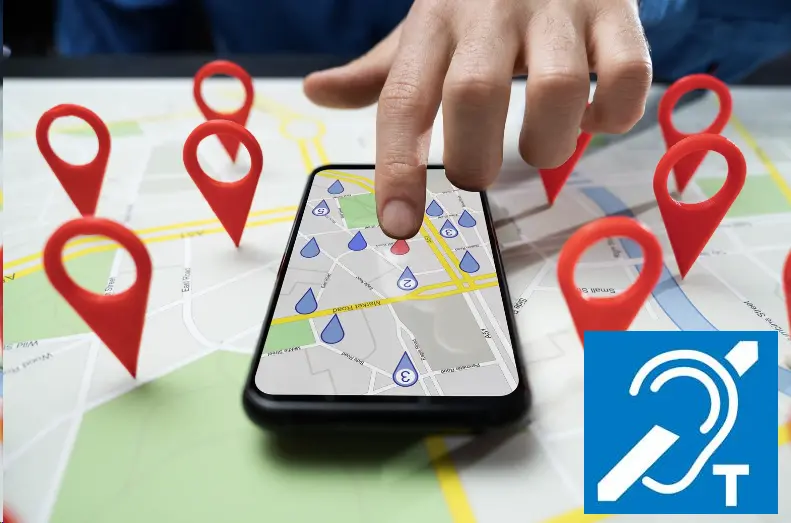
Having hearing loss requires us to think about how we will hear everywhere we go. This can be particularly challenging in public settings like places of worship, a meeting room, or even a service counter where hearing aids alone are often not enough. Assistive listening systems like hearing loops can help you hear better in different locations — but when you’re planning your day out and about, how do you know where hearing loops are?
Thanks to a joint effort by HLAA’s Get in the Hearing Loop (GITHL) program and Google, you can now use the Google Maps app to find out before you go if a hearing loop is available at a business or venue. At the request of the HLAA GITHL committee, Google has recently added Assistive Hearing Loop as an accessibility attribute in Google Maps. Having easy access to hearing loop locations will help millions of people with hearing loss find communication access when they venture out. GITHL is helping Google Maps add loop locations to its database, and venues can also update their profiles with this information.
 Hearing loops are user-friendly assistive listening systems that offer easy, immediate, discreet communication access and universal hearing aid compatibility.
A hearing loop system transmits an audio signal directly into telecoil-enabled hearing devices via a magnetic field, greatly reducing background noise. Most prescription hearing aids and cochlear implants have telecoils, ask your audiologist or hearing instrument specialist about how to use this function.
For people without hearing devices or hearing devices without a telecoil, public venues are required to provide hearing loop receivers and headphones. Watch this video on how hearing loops work.
With Google Maps hearing loop information at our fingertips, we can easily find looped locations and plan outings, errands, and activities that are hearing accessible. Without this much needed information, we may have simply stayed home.
The new Google Maps feature is good for businesses and entire communities, too. Venues can easily promote their hearing loops and attract more customers, and more people will learn about hearing loss and communication access in their neighborhoods. And all of this combines to make advocating for hearing loops easier.
Globally, you can find hearing loops in theaters, tourist attractions, senior communities, and places of worship. Hearing loops are also appearing in airports, elevators, grocery stores, libraries, and government offices. By improving audio clarity and comprehension in places where it is often difficult to hear, hearing loops help us stay engaged and active.
“When I experienced hearing loops for the first time — seven years after I started using hearing aids — it completely revolutionized my world of hearing,” said Ibrahim (Ib) Dabo, director of Enterprise Business Systems for Global Ministries, United Methodist Church and HLAA Board member, “The clarity and proximity of speech are something I never imagined. It significantly improved my understanding of speech and increased my confidence to communicate in challenging settings.”
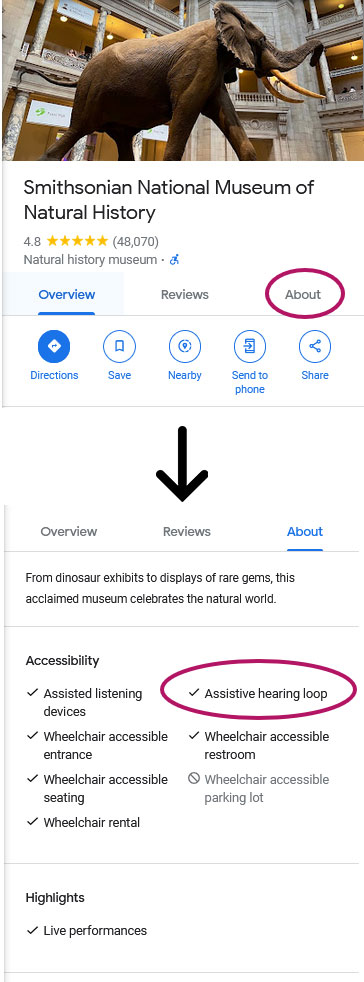
(Click to view larger image)
 Help spread the word that hearing loops are now on Google Maps. Tell your friends, family and your local venues: 5 Actions to Promote Hearing Loops on Google Maps
Write a hearing loop review on a venue’s Google Maps listing or use your review to request that a hearing loop be installed. When possible, include a photo of the hearing loop sign.
For more information on hearing loops, how to use them, and how to advocate for them, visit hearingloss.org/GITHL.

By Cheri Perazzoli, Get in the Hearing Loop Program, volunteer committee chair
Enjoyed this post? Never miss out on future posts by following us.
HLAA regularly hosts webinars on a variety of hearing wellness topics. View the upcoming schedule or watch a previous video.



If you or someone you know has a hearing loss, visit hearingloss.org for resources.
Find a local chapter or Walk4Hearing near you.
For questions, contact HLAA at inquiries@hearingloss.org.

Empowering strategies and real-life examples from a professional addressing when, why, and how job seekers and employees should disclose their hearing loss.
Employment Hear This! Blog
A new law in Hawaii will lead to the development of a State Plan on Hearing Loss to address vital hearing healthcare needs and close service gaps.
Advocacy Chapters Hear This! Blog
Learn how to report missing, inaccurate or out of sync television captions with the Federal Communications Commission (FCC).
Accessible Communication Advocacy Hear This! Blog
Discover how Title III of the ADA ensures equal access and effective communication through assistive listening systems in places of public accommodation.
Accessible Communication Advocacy Hear This! Blog
Virginia’s new law requires movie theaters to offer open-captioned screenings, making cinema more accessible for viewers with hearing loss.
Advocacy Hear This! Blog
A prominent battery manufacturer makes an important, senior-friendly accessibility update to its hearing aid battery packaging.
Advocacy Hear This! Blog
After delaying eight years to treat her hearing loss with a cochlear implant, Teri wishes she had done it sooner; read HLAA's third inspiring CI Day story.
Chapters Hear This! Blog Success Stories
Qais Khan is a passionate advocate for young adult cochlear implant recipients—read the second of HLAA's three inspiring stories for CI Day.
Advocacy Hear This! Blog Success Stories
Read about Doni, a young cochlear implant recipient, and his family in the first of three inspiring stories for International Cochlear Implant Day.
Hear This! Blog Success Stories
Flying for the holidays with hearing loss? Check out our 8 essential travel tips, advocate for your rights and learn a new way to file complaints.
Advocacy Hear This! Blog
Read the inspiring stories—and advice—of three military veterans with service-connected hearing loss who are HLAA Chapter leaders.
Chapters Hear This! Blog Success Stories
Four members of the HLAA Task Force for Accessible, Inclusive Employment share career insights and workplace strategies for people with hearing loss.
Employment Hear This! Blog Technology