Home » Music/Entertainment

What People with Hearing Loss can Learn from Professional Musicians

I was honored to serve as a panelist for The Joy of Music/Loving Your Ears Research Symposium at the HLAA 2023 Convention in New Orleans. It was clear from all the questions the panel received that music listening is an important topic for people with hearing loss. Even though I am a cognitive neuroscientist researching music perception with hearing loss, I found myself leaning on my conservatory training as a classical pianist when answering many of the questions. This article summarizes the top questions from the symposium and some recommendations, drawing from my music conservatory background.

Problem #1: I can’t understand song lyrics at live concerts.

Advice: Study in advance like a musician.
  • Picture of a live concertBefore the concert, study the pieces, particularly making sense of each song’s lyrics and overall story. Understand how the lyrics differ between chorus vs. verses.
  • Listeners without hearing loss may also struggle with this because of Problem #2.

Problem #2: It’s so loud and distracting at a live concert that I can’t hear anything.

Advice: Frame expectations going into a concert.
  • Live concerts can be challenging due to large crowds and environmental noise. Also, the sound may seem quite different from the recording (for example, people could be singing out of tune or the venue’s acoustics and speakers might amplify and even distort the sound). But this is also what makes concerts exciting!
  • Reframe your expectations to know that you’ll be walking into a situation that may sound quite different from your listening experience at home.
  • Right after the concert, listen to a pristine sound recording like the CD and watch the official music videos to reinforce your memories of the concert and to help your music perception.

Problem #3: I was in a choir/band/music group and received a cochlear implant or hearing aids. Now, it sounds awful. It makes me not want to participate in musical groups anymore.

Advice: Be patient. It takes time. Practice makes perfect.
  • Just as musicians must practice long hours, practice makes perfect when learning to use your hearing aid or CI. Work with your audiologist to adjust the settings over time.
  • Rhythm is often the most preserved element for CI users—begin by listening/focusing on music with rhythmic elements. Some of my favorites:
  • Practice by yourself (i.e., solo) for a chunk of time. Then, when you’re ready, try rejoining the group.
  • Don’t rely on your ears—record yourself playing. Performing musicians know that how we hear something at our instrument on stage differs from what the audience hears in a cavernous concert hall. I’ve always recorded myself repeatedly while taking notes on my scores to improve my playing. Also, ask a teacher or coach to help you. Rely on others to be your “auditory mirrors.”
  • Use technology. Use a tuner to check if you are out of tune. Use metronomes. These can now be found easily as phone apps. Use these tools to aid you; professional musicians use all tools available.
  • Consider in-ear monitors. Professional musicians wear customized in-ear monitors to help them hear themselves and protect their hearing. For example, see HLAA 2023 Research Symposium panelist Michael Santucci’s work at Sensaphonics. You can purchase in-ear monitors as alternatives to hearing aids. See this review of ASI Audio’s 3DME In-Ear Monitors by Nancy Williams.

Additional Tips to Enhance Music Listening

  • Use sound jackets to enhance your experience of live music concerts:Woman wearing a sound shirt
    • Chicago Lyric Opera is piloting the SoundShirt: When sound is recorded, engineers mix the music and transform the sound data into the SoundShirt. This, combined with English subtitles or sign language interpretation, provides a full experiential immersion with an opera. Watch on YouTube.
    • SoundShirts are manufactured by CuteCircuit.
    • You can also use something else that transmits the vibrations. Anecdotally, I’ve heard about people who are deaf holding balloons to their chests at concerts to feel the vibrations of the music.
  • Become an expert listener:
    • Musical training teaches musicians to be expert listeners. When we hear a composition, we don’t simply listen to it once. We listen to it multiple times, gradually transforming our understanding of the piece. We study the history and social context that surrounds a composition or composer. We read analyses of compositions.
    • So, if music has lyrics, study the lyrics and the poetry. Analyze it. Expert listening skills can be developed through music appreciation classes or focused listening. Nancy Williams is an amateur pianist with hearing loss who writes blog posts about this at Grand Piano Passion.
    • For pop music, this may involve watching music videos, reading interviews with the artist and studying the lyrics vs. instruments by themselves. For example, Apple Music allows you to see the lyrics. Then, you can invoke Apple Music Sing to hear the instrumental portion of the music separately.
    • How does the song change over time regarding shifts in emotion, sound quality, dynamics and instrumentation? Studying these “landmarks” and understanding the structure of the music will make you a more informed listener.

View HLAA 2023
Research Symposium Highlights

To watch edited clips of The Joy of Music/Loving Your Ears presentations, click here.


Karen Barrett

Guest blog written by Karen Chan Barrett, M.Mus., Ph.D., auditory cognitive neuroscientist and assistant professor, University of California, San Francisco, and scientific analyst for UCSF’s Sound Health Network.

Enjoyed this post? Never miss out on future posts by following us.

The Joy of Music / Loving Your Ears

Watch our excerpted videos from the HLAA 2023 Research Symposium in New Orleans, featuring Dr. Barrett and other experts discussing various aspects of music and hearing loss. All videos are captioned.


Get the latest news and updates from HLAA

This field is for validation purposes and should be left unchanged.
First Name(Required)

HearingU Webinars

HLAA regularly hosts webinars on a variety of hearing wellness topics. View the upcoming schedule or watch a previous video.

Watch a Webinar


Follow HLAA on our social channels


If you or someone you know has a hearing loss, visit hearingloss.org for resources.

Find a local chapter or Walk4Hearing near you.

For questions, contact HLAA at inquiries@hearingloss.org.
Home » Music/Entertainment

Music Performance with a Cochlear Implant

A professional musician in New York City for two decades, Jonathon Taylor retired early due to progressive hearing loss that could not be helped with hearing aids. After receiving a cochlear implant 17 years later, Taylor participated in a week-long adult band camp at Michigan’s Interlochen Center for the Arts in August 2021, an experience he related in the winter 2022 issue of Hearing Life magazine. Last summer, he returned to camp with significantly improved results, as he shares here in honor of Better Hearing and Speech Month.

When I returned to Interlochen’s band camp in 2022, the conductor was using a microphone to address the assembled musicians—likely a result of the Hearing Life article where I mentioned my difficulty understanding him. This announcement was greeted by applause from the entire band, many of whom apparently also had trouble hearing him. This is an important lesson for self-advocacy as encouraged by HLAA—don’t be shy about requesting accommodations! When you need them, you probably are not the only one.

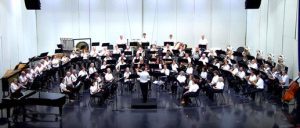
Interlochen's adult band camp orchestra on stage

Interlochen’s adult band camp orchestra on stage

So how am I hearing today? Since implantation, my hearing has dramatically improved, though at a somewhat slower rate in the second year. Before surgery, my sentence comprehension score was 62% in quiet. Within four months it was up to 85%, and at seven months I was able to correctly repeat an astonishing 97% of sentences in quiet.

During the year after my implant, while in the country with my wife, I told her that I had heard a bird, which in and of itself was not surprising. But the fact that I knew it was a bird meant that I was recognizing more sounds, in addition to better understanding speech. Although hearing tests check your ability to hear pure tones, most sounds in the real world, including music, are not pure tones, but a combination of harmonics above the fundamental pitch.

Since I am not a neuroscientist or audiologist, I cannot vouch for the scientific accuracy of my observations. But I believe that my problems with pitch arise from having different degrees of hearing loss at different pitches, making those harmonics off-kilter—not balanced as I was accustomed to before my hearing loss. What distinguishes a bird song from a trumpet, or a trumpet from an oboe playing the same note is timbre, which I think is related to the balance of harmonics. Timbre is “the character or quality of a musical sound or voice as distinct from its pitch and intensity” (Oxford Languages). Essentially, my brain has relearned the pattern of harmonics of birds, oboes and trumpets.

Nina Kraus, a neuroscientist at Northwestern University, has written a wonderful book, Of Sound Mind, about the role of the brain in hearing. She gives an example of a ferret, which has a neuron that responds to a preferred frequency of 8000 hertz (Hz). However, when a pitch of 6000 Hz is paired with a reward, the ferret’s brain shifts its preference to 6000 Hz.

Interlochen Center for the Arts lakeside waterfront

Interlochen Center for the Arts lakeside waterfront

Initially, I had assumed that the tuning of the electrodes in my cochlear implant imposed very strict limits on the ability to perceive pitch and timbre—but the plasticity of the human brain, like the ferret’s, is amazing. Although I still believe there are limits on pitch perception with a CI, they are not as rigid as I had thought. I can now enjoy listening to music more than I could at first, and even more than I could with hearing aids alone.

Prior to my implant, an orchestra concert was just a big wash of sound because I could not separate out different instruments. That has improved gradually in the nearly two years living with my CI. I am now able to enjoy live performances at the Metropolitan Opera, New York City Ballet and Broadway musicals. I would recommend that anyone with an implant who wishes to listen to music start by listening to small ensembles before attempting larger ones.

It’s difficult to know why I was able to improve so much more than I would have without doing anything special. I suspect that exposure to speech and sounds enabled my brain to process these stimuli and learn to sort them out. Post-activation, I did receive auditory training, which helped me focus on differences between similar speech sounds. This included listening to podcasts and doing homework exercises with my wife.

Taylor with Traverse City, MI, semi-pro baseball team Pit Spitters mascot

Taylor with Traverse City, MI, semi-pro baseball team Pit Spitters mascot

As for music, I believe that using the Angel SoundTM app, along with slowly playing scales on a keyboard may have helped somewhat. I would also surmise that starting to practice my instrument and playing in the ensemble at camp may have made even more of a difference than the auditory training. I personally believe that active performance might be more beneficial than passive listening.

Will I ever hear music the way I did in my youth? Probably not. Even if I completely recover my physical instrumental skills, I’ve accepted that I would never be able to resume my professional career. However, with a different set of expectations, I can once again enjoy playing alone and occasionally performing in an ensemble, which gives me a sense of accomplishment. And, of course, I am grateful to be able to resume listening to and appreciating music.

Want to take a deeper dive into this topic? Attend the HLAA 2023 Convention Research Symposium on Friday, June 30, for an in-depth look at the science behind music and hearing loss. The “Joy of Music/Loving Your Ears” panel will feature four prominent experts in the fields of audiology, science and music performance.


Jon Taylor
By Jon Taylor.
During his career, Jon Taylor performed with the Brooklyn Philharmonic, New York Philharmonic, Orpheus Chamber Orchestra, Empire Brass Quintet and many Broadway shows and dance companies. He is a past president of the HLAA New York City Chapter and on the board of the HLAA New York State Association.
His article was excerpted from a recent talk delivered to the HLAA Twin Cities Chapter in Minneapolis.

Enjoyed this post? Never miss out on future posts by following us.


Get the latest news and updates from HLAA

This field is for validation purposes and should be left unchanged.
First Name(Required)

HearingU Webinars

HLAA regularly hosts webinars on a variety of hearing wellness topics. View the upcoming schedule or watch a previous video.

Watch a Webinar


Follow HLAA on our social channels


If you or someone you know has a hearing loss, visit hearingloss.org for resources.

Find a local chapter or Walk4Hearing near you.

For questions, contact HLAA at inquiries@hearingloss.org.

Home » Music/Entertainment

Walk4Hearing Brings Life-Changing Discovery to Alabama Man

Every year, the Hearing Loss Association of America (HLAA) Walk4Hearing brings hope and empowerment to thousands of participants with hearing loss, their families and supporters in 20 communities across the nation. The events raise funds and awareness for hearing loss programs and can be very moving for walkers and participants. But for Mark Robinson, 64, of Birmingham, Alabama, the 2019 Walk4Hearing in Washington, DC, brought a significant revelation.

Mark And Lindsay Traveling In Hamburg, Germany

Mark and Lindsay traveling together in Hamburg, Germany.

Mark’s daughter Lindsay is program coordinator for Hearing Industries Association (HIA), an HLAA Hear for Life partner. While visiting her, he attended the Walk, and had his hearing screened at the on-site mobile trailer provided by the Lions Community Outreach Foundation—with unexpected results. The exam showed a slight loss in the lower frequency range and significant drop-off in the high frequencies. Later, Mark followed up with an audiologist, who confirmed the earlier outcome.

Mark recalls, “I suspected that I may have had mild hearing loss, but the results were far worse than I believed. This came as no surprise to my wife and family, who had been frustrated for years when I missed what they said. I also noticed that my hearing difficulty caused me to hold back from conversations in crowds and restaurants, which was extremely unlike me. Over time, hearing loss changed my personality from a gregarious person into someone quiet and hesitant.”

An avid music fan and rock guitarist, Mark attributes his hearing loss to attending thousands of live rock and heavy metal concerts over six decades from a very young age without ear protection.

“I killed my own ears,” he admits. “Having been involved with rock music for most of my life, both as a concertgoer and as a performer, I like my music loud and fast. Back in the ’70s and ’80s, no one cared about equalization, and they always had the sound turned up to ‘11.’ Nowadays, I wear heavy duty ear protection when I attend festivals, so I don’t cause further damage.”

Mark Mountain Climbing In Ecuador At 17,700 Feet Elevation

Mark mountain climbing in the Ecuadorean Andes at 17,700 feet.

Noise-induced hearing loss is an increasingly prevalent global issue for all ages, particularly among youth. According to the World Health Organization, unsafe listening practices may be a risk factor for more than 1 billion young adults and half of young people aged 12 to 35. The American Speech-Language Hearing Association (ASHA) estimates that nearly 30 million American workers are exposed to hazardous noise levels daily.

Following his diagnosis, Mark was fitted with hearing aids that have made a big difference in his life and relationships. He has been able to resume his normal activities and is once again able to understand and participate in conversations with friends and family members at home, church, and other venues.

He says, “It might be an overstatement to say that the HLAA Walk4Hearing saved my marriage. But I know my wife was getting so tired of repeating herself and facing me so I could understand her. Now, wearing my hearing aids, we can interact more naturally; I can once again take my bride out to dine and talk at a nice restaurant. I can even go to a movie with my children and enjoy the experience with them. As a result, I no longer feel left out of my family’s life.”

Mark encourages anyone who suspects they may have a hearing loss to attend a Walk4Hearing event and to have their hearing screened, whether on-site (if available) or at an audiology clinic.

Picture of Screening Trailer Volunteer Audiology Students From Gallaudet And University Of Maryland

2019 Walk4Hearing screening trailer staffed by volunteer audiology students from Gallaudet and University of Maryland.

“Find out if you are a candidate for hearing assistance. Don’t be stubborn like I was and miss out on your life or family because you can’t hear, when you can do something about it!”

Join HLAA at a Walk4Hearing event this spring or fall and be part of HLAA’s community of support in action. We’re breaking down barriers to hearing health and empowering people with hearing loss across the U.S. Together, we can bring hope to hearing loss.

Join or Donate to a Walk to bring hope to people with hearing loss in your community.


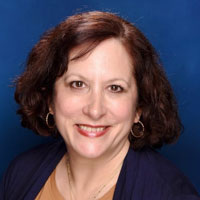
Teri Breier headshot
By Teri Breier, Communications Specialist, Hearing Loss Association of America

Enjoyed this post? Never miss out on future posts by following us.


Get the latest news and updates from HLAA

This field is for validation purposes and should be left unchanged.
First Name(Required)

HearingU Webinars

HLAA regularly hosts webinars on a variety of hearing wellness topics. View the upcoming schedule or watch a previous video.

Watch a Webinar


Follow HLAA on our social channels


If you or someone you know has a hearing loss, visit hearingloss.org for resources.

Find a local chapter or Walk4Hearing near you.

For questions, contact HLAA at inquiries@hearingloss.org.

Home » Music/Entertainment

“CODA” Movie Sheds Light on Hearing Loss

Few cultural phenomena have brought attention to the community of people with hearing loss —– which includes people who are Deaf or hard of hearing —– to the extent that the 2022 Oscar-winning movie “CODA” has. It’s the first film to win an Oscar where three of the main characters are Deaf.

The film won three Oscars

  • Best Picture
  • Best Adapted Screenplay for writer and director Sian Heder
  • Best Supporting Actor for Troy Kotsur

“CODA” is an acronym meaning “Child of Deaf Adults,” and the film focuses on daughter Ruby, played by Emilia Jones, who is the only hearing member in a Deaf family.

Some say the popularity of “CODA” has launched a movement for the invisible disability of hearing loss, as the film’s powerful dramatic story was brought into the mainstream. Suddenly, everyone is talking about the challenges of hearing loss, as the heartwarming coming-of-age story played out on the big screen.

Film director Larry Guterman, who lives in California, has served on the HLAA board of directors, and has severe hearing loss. He recently interviewed director Sian Heder, who adapted “CODA” from a 2014 French film. The two directors compared notes on movie-making, which both dryly observed, can be a bit like going to war. Guterman also brought his own experience contending with hearing loss to the discussion, as the two delved into why this film speaks to so many of us.

Larry shared some highlights from his discussion with Sian over Zoom in July.

A Chat with Director Sian Heder

Larry Guterman interviewing Sian Heder

Larry Guterman interviewed Sian Heder via Zoom.

Sian Heder sits in a room in her Gloucester, Massachusetts home, a working-class town that is the setting of her film, “CODA,” the movie that won the Oscar for Best Picture and Best Screenplay, which she wrote and directed. She purchased the house, close to where she grew up, after the film. She admits the emotional tug of the movie, set in this working-class town, is not lost, even on her.

“Every time I watched it (during post-production), I cried. My editor would say to me, ‘stop it already! When are you gonna stop crying? You’ve seen it 1,000 times,’” Heder admitted.

At age 45, after years of dogged determination and perseverance trying to get the movie made despite seemingly impossible odds, Heder is the picture of calm and level-headed strength, over our Zoom call. She seems to have taken the incredible the success in stride. This master of her craft says the real rewards are the validation of her peers, and especially the impact her work has had on the marginalized and those who’ve had to struggle. She’s driven by a fierce determination to tell stories that have an impact in the world, and “CODA” achieved this in stunning, unassuming fashion.

A Familiar Story

The 2014 French version of the film used actors who did not have hearing loss, but Heder says she loved the simplicity of the story, about a girl growing up and breaking away from her family. She wanted to tell the story in a way that portrayed Deaf characters more authentically.

“This is just a kid leaving home. What I was interested in was, within that framework, the exploration of all the unfamiliar, which was looking at a family that we have never looked at before in this way. I think audiences (these days) are more open to all these kinds of unfamiliar things, like sitting in silence for a long portion of the movie,” explained Heder.

As a fellow director, I asked her about the risks of remaking a film, about taking that leap. Heder said she was intrigued by the chance to explore a kind of family dysfunction that she had never seen before — one where the more mundane daily struggle was complicated by the tension between Deaf culture and the hearing world.

“I’m really drawn to stories about outsiders, or people who have been marginalized, or communities which haven’t really been portrayed as the leads of a story. I thought it had so much potential cinematically. The original film was treated in a lighthearted way, so in a lot of ways it was very ripe to make another movie, because I thought, well, here’s this very deep premise,” she shared.

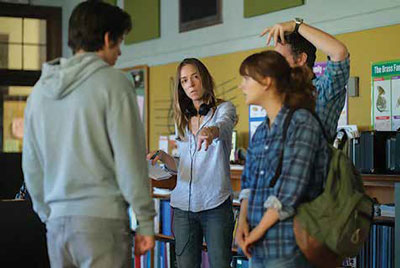
Sian Heder on the set

Director Sian Heder on the set of “CODA”

In the movie, Ruby nears the end of high school and begins to entertain her dreams of going to a renowned music college for singing. She struggles with breaking free from her Deaf parents and brother, who rely heavily on her as a translator for their fishing business, and they can’t relate to her love of singing. The family drama is set in a small fishing town near where Heder grew up. I asked Heder if she had a personal connection to hearing loss, or to the Deaf community before making the film.

“I did not have it before, and I deeply found it. As I was making the film, I knew going in that I was an outsider to this community, and if I was going to tell this story, I had to have collaborators from the community. There’s a saying within the Deaf community that I’m sure applies to any underrepresented community, which is ‘Nothing About Us Without Us,’ she explained.

“When I started researching the film, I immediately had… four key “CODA” collaborators who were sharing their experiences with me… The more that I understood and learned about Deaf community and culture, the more adamant I became about how the movie needed to be made. I knew that I wanted to have not only Deaf actors in these roles, but I also wanted to have 50% of the dialogue in American Sign Language (ASL), without having Ruby speak through all of those scenes, which is what was being pushed on me. I didn’t want to use music to fill up all of the silence,” she said.

Committed to Authenticity

The studio felt her choices were not commercial and wouldn’t appeal to mainstream audiences, and promptly dropped the project. The movie was dead for six months, until one of the supportive studio executives left and helped get it made independently.

Heder learned sign language for the movie and immersed herself in the culture through her collaborators. Everyone was on-board, including actress Marlee Matlin, who usually wears a hearing aid, but took it out for the movie to play Jackie Ross more accurately. Jackie is Ruby’s mom, who signs but doesn’t speak at all.

“I think that was my goal going in — to make a movie that honored Deaf culture, that really portrayed it in an authentic and nuanced way, but that also transcended it and made it about the experience of family,” Heder said.

Eventually, the movie was bought by Apple TV, allowing Heder to celebrate her choices that seemed risky at the time, including her choice of the high school concert scene where Ruby sings in her glee club performance. The audience experiences the scene from her Deaf parents’ point of view — in total silence, thus allowing hearing viewers to empathize with their daily struggle.

“It’s very validating as an artist to be like, ‘This is what I knew in my gut was not a conversation,’ and, sure enough, they are all the things that people have looked at as being unique about the movie,” Heder explained. “Down to the silent concert scene, which I was arguing with people about up until the final mix.”

Scenes like these are cinematic gold; they speak not only to the hard of hearing, but also to hearing audiences—they’re specific and universal; artful, hopeful and uplifting.

Common Struggles

Heder even incorporated one of the most commonly frustrating experiences for people with hearing loss, a group conversation in noisy background chatter, that you struggle to follow. In the movie, Ruby’s brother Leo, played by Daniel Durant, who yearns to be accepted among his co-workers, struggles to lip-read when he goes to a local bar with them, but bluffs and laughs along with the jokes anyway.

The scene is shot from Leo’s perspective in the bar, and the shots mirror his point of view, making it impossible to follow what’s happening.

“If you watch this scene, the camera is on someone’s lips, but then they drink a beer (blocking their lips),” Heder said. “Then someone else laughs across the table, the focus changes; next, Leo’s looking at a woman across the bar, and by that point, he’s tuned out and it’s like, ‘who cares anyway?’”

Heder shared that it was a variation on a scenario her collaborators described in excruciating detail, and it’s one I can certainly relate to. Our easy rapport discussing this experience illustrated her deep empathetic commitment to telling this story, which feels like everyone’s story who has a hearing loss.

I described my own experience to Heder, “I was at Thanksgiving dinner last year with strangers and for two hours, I was pretending to laugh and nod, and wondering, am I reacting appropriately? So, you’re having this weird out-of-body experience where you’re trying to engage with the person, and you can’t quite understand…and you’re also evaluating whether your persona and affect…is appropriate.”

It’s a feeling that Heder says she’s since experienced herself during rapid-fire group sign language conversations, struggling to follow along and sometimes pretending to understand, and eventually becoming exhausted, and giving up.

She expressed her surprise, even indignation, at, “the amount of work that is asked of people who have a disability to…play along, to make do in the world, without anybody bending or changing their behavior to sort of accommodate you.”

She was committed to creating a scene that immersed the viewer in the daily struggle people with hearing loss contend with. Scenes like these are cinematic gold — they speak not only to people with hearing loss, but also to hearing audiences — they’re specific and universal — artful, hopeful and uplifting.

New Perspective

Heder explains, “I think the experience of making “CODA” has also helped me understand how sort of barren the field of representation has been in terms of the Deaf and hard of hearing community, and the disability community in general. So, I’m also very invested as a storyteller, in continuing to tell these stories.”

As a director with hearing loss, I can’t thank Heder enough for her commitment to telling a story about disability in which everyone can feel included — a beautifully crafted, funny, empathetic work that touches the soul.

Stay tuned to HLAA’s Hearing Life e-news and social media channels for video clips and more details of my interview with Sian Heder.

You can watch “CODA” on Apple TV+.


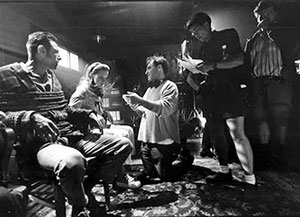
Larry Guterman directing

Larry Guterman directs actors on the set of “Cats & Dogs”


Larry Guterman directing

Larry Guterman on the set of “Cats & Dogs”


Larry Guterman

By Larry Guterman

Larry Guterman is a feature film director (“Cats and Dogs” for Warner Bros., “Antz” for Dreamworks), who also has severe hearing loss. He has served on the HLAA board of directors and is co-founder of SonicCloud, a technology company dedicated to personalizing sound on phones and computers for people who have hearing loss. Email Larry at larrygute@gmail.com.


Enjoyed this post? Never miss out on future posts by following us.


Get the latest news and updates from HLAA

This field is for validation purposes and should be left unchanged.
First Name(Required)

HearingU Webinars

HLAA regularly hosts webinars on a variety of hearing wellness topics. View the upcoming schedule or watch a previous video.

Watch a Webinar


Follow HLAA on our social channels


If you or someone you know has a hearing loss, visit hearingloss.org for resources.

Find a local chapter or Walk4Hearing near you.

For questions, contact HLAA at inquiries@hearingloss.org.