Back Get Involved

HLAA National Support Group for Parents of Children with Hearing Loss

15 April 2026 @ 8:00 pm ET - 9:00 pm ET HLAA National Support Group for Parents of Children with Hearing Loss Chapters Virtual Meetings Read Post
Home » Parenting

Celebrating International Cochlear Implant Day: How Doni Found Light in the Journey

Inspiring Cochlear Implant Stories

Every year on February 25, advocates for hearing health use International Cochlear Implant Day to celebrate the medical advances and technology that make cochlear implants (CIs) effective for people with severe or profound hearing loss.

Did You Know?

  • The first successful attempt to stimulate the auditory nerve of a deaf patient using a wire electrode took place in France on February 25, 1957. It was another three decades before CIs became commercially available in the mid-1980s.
  • More than one million CIs have been implanted worldwide, as of 2022. Of those, 118,000 adults and 65,000 children have received CIs in the United States (NIDCD).
  • This year, HLAA celebrates International CI Day 2026 with three stories from: Joel Dean and Jennie Antonakis, parents of Doni; Qais Khan, a young professional from the United Kingdom; and Teri Breier, a recent CI recipient on our staff.
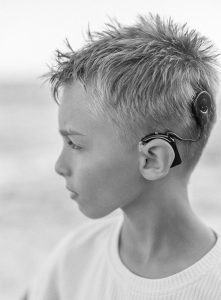
Black and white photo of a young boy in profile wearing a cochlear implant

Doni, 8, shows off his cochlear implant.

Doni’s Story

By Joel Dean and Jennie Antonakis

Doni came into this world as a beautiful, healthy baby boy after a routine pregnancy. When he failed his newborn hearing screening on the left side, the doctors reassured us it was nothing to worry about. “C-section babies always have fluid in their ears,” they said.

A month later, the hospital tested his hearing again and passed him. We trusted the results, but deep down, something felt off. We now believe it was a false pass.

The Years of Not Knowing

What followed were years of searching for answers we didn’t know we needed. Doni was colicky and suffered from constant ear infections and stuffiness. We made countless visits to ENT specialists, ultimately having ear tube surgery at nine months and adenoid removal surgery at age three—yet not a single doctor diagnosed what was really happening.

I thought maybe it was ADHD or he had trouble focusing, but I couldn’t shake the feeling that we were missing something bigger. We moved to a new town and when Doni had a routine physical with a new doctor at age five, we finally heard: “During the hearing test, I turned the volume all the way up on the left side and he never raised his hand. You need to get to an audiologist right away.” Only a week later we saw the words “profoundly deaf” on paper.

The diagnosis felt like a punch to the gut. We had been leaned-in, attentive parents. How could we have missed this? How could everyone have missed this? We reached back out to teachers, friends and family, and every person replied that hearing loss never crossed their mind.

From Fear to Purpose

For a while, the shock turned into fear. Fear of the unknown. Fear of what challenges lay ahead. Fear that we wouldn’t know how to support him the way he deserved.
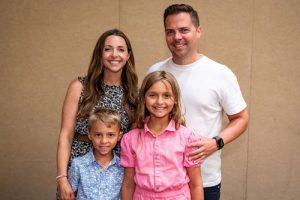
A family of four smiling indoors

Doni and his family at the HLAA 2024 Convention in Phoenix.

Then Jennie (Doni’s mom) decided to channel that fear into something meaningful. She joined the Hearing Loss Association of America (HLAA) Board of Directors as the first-ever parent of a child with hearing loss. The board welcomed Jennie with open arms, eager to hear her perspective and help other parents who are navigating similar journeys.

Through HLAA, Jennie and Doni were introduced to a community of wonderful, successful people living with hearing loss. This community taught us so much about resilience, advocacy and hope. Doni received a cochlear implant at age six and now has mentors he can call when he needs support—and so does our family.

Choosing Positivity and Light
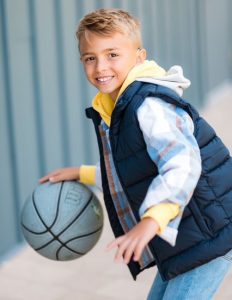
Young boy smiling while dribbling a basketball

Doni enjoys playing all types of sports.

Doni struggles every day, but we choose positivity and light. We count our blessings for the health we have otherwise, and we focus on what Doni can do—which, as it turns out, is everything. Doni is a resilient and fearless little guy who is knows that hearing loss doesn’t define his limits. While a lot of things come with added challenges, watching him power through it all has shown us just how resilient he truly is. He’s also incredibly compassionate. Doni really cares about helping other children with hearing loss and cochlear implants. We keep an Instagram profile (@andonismason) where he shares his experiences and journey, hoping to connect with others and let them know they’re not alone. We’ve had so many amazing messages with strangers who have turned into supportive friends through social media.

Whether you’re a parent just receiving your child’s diagnosis, a young person navigating school with hearing loss or an adult looking for connection, we want you to know: you are not alone.

Doni is currently working on his first book on hearing loss to share with the world. Maybe one day you’ll see him on the field as a professional athlete. After all, he’s already proving that nothing can stop him.
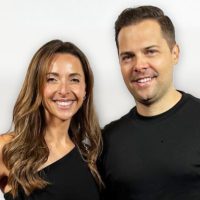

Jennie and Joel Dean

Jennie Antonakis is the global enterprise lead at Amazon Ads and a past member of the HLAA Board of Directors. Joel Dean is the founder and CCO of JDM Music + Sound. The family lives in the greater Los Angeles, CA, area. 


Get the latest news and updates from HLAA

This field is for validation purposes and should be left unchanged.
First Name(Required)

HearingU Webinars

HLAA regularly hosts webinars on a variety of hearing wellness topics. View the upcoming schedule or watch a previous video.

Watch a Webinar


Follow HLAA on our social channels


If you or someone you know has a hearing loss, visit hearingloss.org for resources.

Find a local chapter or Walk4Hearing near you.

For questions, contact HLAA at inquiries@hearingloss.org.

Home » Parenting

Back to School with Confidence

Helpful back-to-school tips for parents of children with hearing loss from a pediatric audiologist and mom.

Chapter Portal Access Membership Required

You must be a Chapter Portal Access member to access this content.

Join Now

Already a member? Log in here
Home » Parenting

Critical Infant Hearing Screening at Risk from Budget Cuts

Before 1993, fewer than one in 10 newborns in the United States were screened for hearing loss. By 2025, thanks to decades of advocacy and public health efforts, an estimated 98% of all newborns receive this critical screening. Today, this hard-fought success is in jeopardy from proposed dramatic federal budget cuts, putting our nation’s infants again at risk.

Advocating for Newborn Screening

This public health success story began in the 1990s, when the Hearing Loss Association of America (HLAA) and other advocacy organizations championed the passage of the Early Hearing Detection and Intervention (EHDI) Act, which became law under the Children’s Health Act of 2000. Since then, the EHDI Act has been updated several times, most recently in 2022, when Congress reauthorized annual funding for both Centers for Disease Control (CDC – $10.7 million) and Health Resources and Services Administration (HRSA – $17.8 million) through 2027.

“Passing the EHDI law was a huge success for HLAA and its advocacy partners,” said Barbara Kelley, Executive Director of HLAA, the leading voice for the growing number of Americans with hearing loss. “It means that parents know before they leave the hospital whether their newborn’s hearing is functioning properly, and if not, take immediate action to provide early intervention for their child.”

Why This Matters

One in 500 babies are born with hearing loss or develop it in early childhood, which ranks among the most common congenital conditions. With hearing loss numbers rising, early detection and intervention is critical to ensuring that children meet speech, language, social and emotional development milestones.

Statistics about infants, children and teens with hearing loss, from HLAA Hearing Loss by the Numbers webpage.

98% of U.S. newborns get their hearing screened each year, thanks to the Early Hearing Detection and Intervention (EHDI) Act of 2000, for which HLAA advocated.

The EHDI story is held in high regard by many HLAA members from the organization’s nationwide network of support. Many are now in their 50s and 60s—born before that legislation passed—and did not get diagnosed with hearing loss until later in childhood or even as young adults. Pre-EHDI anecdotes abound about delayed intervention. Most say the lack of early diagnosis caused lifelong issues, including delayed speech, academic challenges and trouble making friends. Had their families been alerted earlier of their hearing loss, timely treatment and accessibility might have given them more confidence, equipment and support services, potentially changing their lives’ trajectories.

For instance, one person on our national staff was diagnosed with genetic bilateral hearing loss at age seven, yet didn’t receive hearing aids until her sophomore year of college, after struggling to hear in class and connect with peers all through her schooling. With the benefit of EHDI, her family likely would have learned about her hearing loss and treatment options much sooner.

Since its passage, EHDI has helped states dramatically improve newborn hearing screening rates—from just 46.5% of infants before the program to nearly 98% today. Between 2018 and 2022 alone, more than 320,000 children received diagnostic services after failing initial screenings, and more than 19,000 children were enrolled in early intervention.

EHDI Supports State Programs and Research

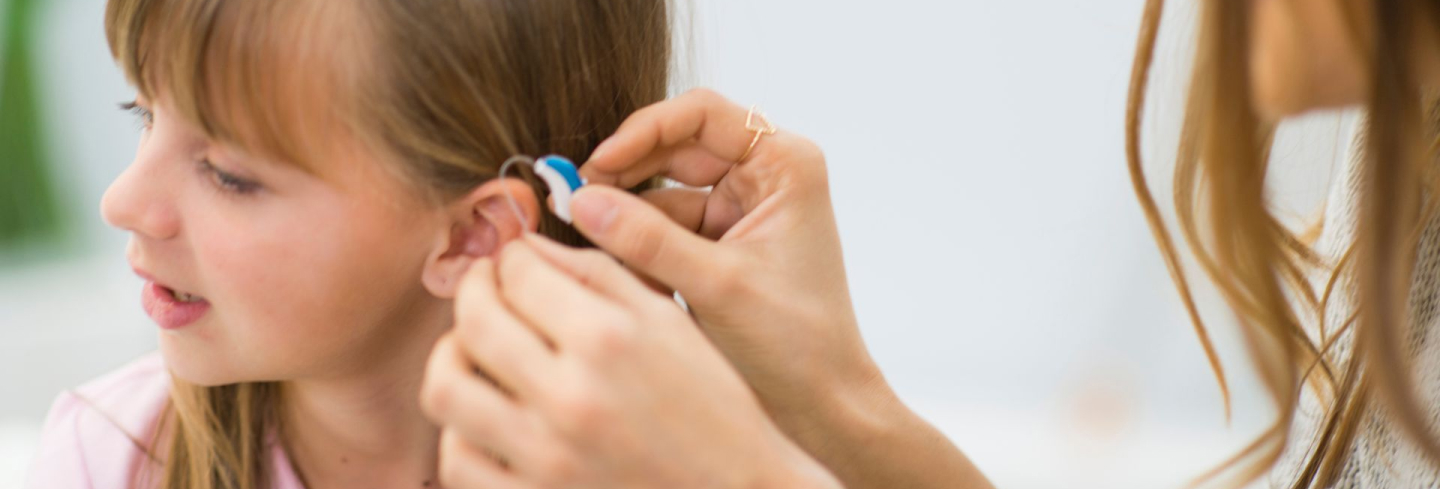
Close up of a child wearing a hearing aid

The EHDI program accomplishes three key objectives:

  1. Supports state data systems: Directs the CDC to fund and assist states in developing and maintaining data systems to evaluate progress, inform research and policy, and identify gaps in follow-up services.
  2. Provides state grants: Funds the HRSA to award grants that help states implement and improve EHDI services through technical assistance.
  3. Encourages research: Promotes hearing research at the National Institutes of Health (NIH) through projects supported by the National Institute on Deafness and Other Communication Disorders (NIDCD).

This progress—decades in the making—is now in jeopardy.

State Programs Will Suffer Without Funds

Recent federal budget proposals would eliminate all HRSA grant funding that supports newborn hearing screening programs. Without this funding, many states may be forced to scale back or discontinue their screening services entirely. Our country would be returning to a patchwork of protection for infant screenings, depending on where they are born and potentially burdening families with additional costs.

In addition, a recent reorganization within the Department of Health and Human Services (HHS) has eliminated CDC’s role in data collection and program assessment—functions that are essential to the success of early hearing detection and intervention efforts at the state level.

Take Action

HLAA, a staunch advocate for the rights of all people with hearing loss, is mobilizing our nationwide network to protect this critical program, and we need your help. Tell Congress to preserve funding for the EHDI program and protect the future of newborn hearing screening nationwide.

For more information or questions, contact:
Neil Snyder, Director of Public Policy, HLAA nsnyder@hearingloss.org


Neil Snyder

By Neil Snyder, director of public policy, Hearing Loss Association of America (HLAA)


Enjoyed this post? Never miss out on future posts by following us.


Get the latest news and updates from HLAA

This field is for validation purposes and should be left unchanged.
First Name(Required)

HearingU Webinars

HLAA regularly hosts webinars on a variety of hearing wellness topics. View the upcoming schedule or watch a previous video.

Watch a Webinar


Follow HLAA on our social channels


If you or someone you know has a hearing loss, visit hearingloss.org for resources.

Find a local chapter or Walk4Hearing near you.

For questions, contact HLAA at inquiries@hearingloss.org.

Home » Parenting

Finding Hope One Step at a Time

A Mom’s Experience with her Child’s Hearing Loss

Sometimes you don’t want your mother’s intuition to be correct. That was my thought the day I heard the doctor say, “You were right—Olivia has bilateral hearing loss, and it’s permanent. She’ll need to wear hearing aids.”

Rodriguez family picture by a stream

Rodriguez family

Those words rang in my ears for weeks, even months later. Even though I had known deep down that my concerns were warranted, hearing the confirmation out loud was difficult to process. My brain started swirling with questions. Was it something I could have prevented? Will it get worse? Was it from the chronic ear infections she had? What will the diagnosis mean for Olivia’s future?

Olivia’s formal diagnosis of sensorineural hearing loss came on June 1, 2023, just a week before she turned six. She had been heavily into gymnastics and was just finishing kindergarten—her first year in a dual immersion program, learning Spanish.

Signs of a Problem

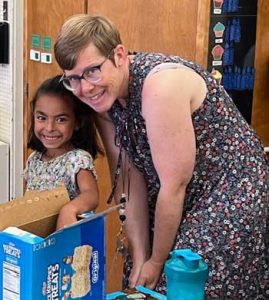
Olivia with her teacher

Olivia with her teacher

By the end of the school year, there were many concerns that I couldn’t dismiss. Frequent ear infections and often having to repeat ourselves when speaking to Olivia. Her iPad volume was always up full blast, with us asking her to turn it down.

When I volunteered in her classroom, I noticed her closely watching classmates to follow along and stay on task. I wasn’t sure if this was from learning a new language or not being able to hear instructions.

Eventually our ENT agreed to a hearing test. She missed responding to a few of the beeps, but the audiologist said, “it’s very common at this age.” I found myself in a similar position to many other parents—insisting that my child be tested further and resisting a professional’s advice to wait and see. I trusted my intuition that something was wrong.

Diagnosis and the Road to Acceptance

When we got the definitive news of Olivia’s hearing loss, I cried on the way home and again when I told my husband. A few days later, I casually mentioned to her that just like some people wear glasses to see better, others wear hearing aids to hear better. I told her that the doctor said she needs to wear hearing aids and I showed her some photos of other kids wearing them.

She asked me if she’d have to wear them only for a day. I told her no. She asked, “two days?” Her eyes welled up with tears, and I didn’t have the heart to tell her yet that she was going to need them daily. I gave her a hug, and we cried a lot over the next several days. She asked hard questions like, “Why me?” and confided she was worried about the kids at school making fun of her. She vowed to wear her hair down every day to cover them up. Her confidence was depleted.

Knowing your child is going through something so emotional and not knowing how to help them is very difficult. I threw myself into searching for resources. As so many parents in this position do, I dug deep into the internet to learn all I could about her new diagnosis, and how I could help her live her best life.

Finding Hope and a Community of Support

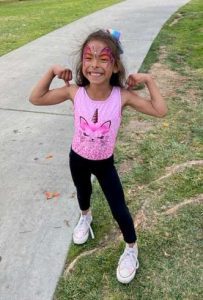
Olivia at the Long Beach Walk4Hearing flexing her arms

Olivia at the Long Beach Walk4Hearing flexing

A mom from an online group told me about the Hearing Loss Association of America (HLAA), a nationwide organization that offers education, advocacy and support for families facing hearing loss, and their Walk4Hearing event in Long Beach, CA, happening just a few days later on June 11. As soon as I found the event online, I saw pictures of families and kids with hearing aids smiling and happy. HLAA holds Walks in 21 cities across the country, all designed to raise funds, awareness and give support to families just like mine.

I immediately registered Olivia, my other daughter Audrey and their Aunt Marissa. Although it was only 10 days after her diagnosis, I was anxious for Olivia to see hearing loss in a fun environment and other kids in the same position. I hoped to show Olivia a community of support and a place where hearing loss is normalized, not stigmatized.

For this particular Walk, there happened to be a drawing to win a free pair of donated Oticon hearing aids, and each of us completed the online entry form. I hadn’t even considered the potential costs of devices, insurance coverage or other expenses yet. I just knew I was desperate for some hope and emotional support for my daughter, and I filled out everything I could to be all in for the event.

The Walk took place in a fun location near beautiful ocean views, shops and restaurants. There were magicians, a face painter and other children wearing colorful hearing devices with cute charms that Olivia was taken with. She liked seeing all the different colors of the earmolds as well—a huge change in attitude.

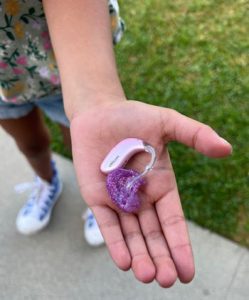
Olivia's pink hearing aids

Olivia’s pink hearing aids

The feeling of support, joy and hope were overpowering that day, and Olivia seemed to feel it, too. We overheard the announcements of prizes for the fundraising teams and then the grand prize of free hearing aids. I’ll never forget how excited we were when they drew Marissa’s name! She immediately donated the hearing aids to Olivia—who felt like the luckiest winner. It was a long way from her “Why me?” attitude from just days before.

Leaving the Walk, I asked Olivia what color hearing aids she would get, and she said definitively, “pink!”  I noticed her eyes were wide open and her face looked bright, something I hadn’t seen since the diagnosis. It was a special moment of hope that I owe to Walk4Hearing.

Hearing Aids Highs and Lows

We had Olivia’s final hearing aid fitting a few months later, and I will never forget her smile when the audiologist turned them on for the first time.  The first thing she did when we got back in the car was turn down the volume of her iPad. We noticed a huge difference right away in her hearing ability.

But Olivia remained uncomfortable wearing her hearing aids to school, often crying, and wanting to wear her hair down to cover them. She eventually stopped wanting to go to gymnastics, too. We continued to find new strategies to help her feel much more comfortable. Her teacher and I decided to read a book about hearing loss to Olivia’s classmates, showed them her hearing aids and answered all their questions. That seemed to take the pressure off and the very next day, Olivia asked to wear her hair up in a ponytail again!

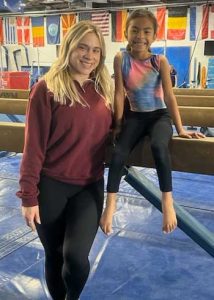
Olivia with her gymnastics coach

Olivia with gymnastics coach Nicole

Although it’s been a process, with a few steps back here and there, Olivia is adjusting to her new normal and learning to advocate for herself. She is now back in gymnastics, doing well in school and even cried when I had to take her hearing aids in for a check recently because she didn’t want to go without them.

It’s a relief to see her happy again, and it all began with last year’s Walk4Hearing. Winning the hearing aids allowed us to fully focus on Olivia’s emotional well-being, and seeing so many others in similar situations gave us the hope we needed for her future.

Since her initial diagnosis, we’ve learned that her hearing loss is progressive, and we are seeking answers. I am now volunteering on the planning committee for the 2024 Long Beach Walk4Hearing in June. I would like to help bring that same spirit of empowerment to others facing hearing loss, and I want Olivia to be a part of this amazing community of support.

Walk4Hearing events raise awareness, funds and hope for people with hearing loss in 20+ cities across the U.S. Join us! Learn more and find a walk near you.


Michelle Rodriguez

Guest blogger Michelle Rodriguez is an accomplished baker, cake artist, entrepreneur, wife and mom in Whittier, CA.

Enjoyed this post? Never miss out on future posts by following us.


Get the latest news and updates from HLAA

This field is for validation purposes and should be left unchanged.
First Name(Required)

HearingU Webinars

HLAA regularly hosts webinars on a variety of hearing wellness topics. View the upcoming schedule or watch a previous video.

Watch a Webinar


Follow HLAA on our social channels


If you or someone you know has a hearing loss, visit hearingloss.org for resources.

Find a local chapter or Walk4Hearing near you.

For questions, contact HLAA at inquiries@hearingloss.org.

Home » Parenting

Lessons from Barbie

All the hype surrounding the new Barbie movie, which grossed $155 million in its opening weekend, has me flashing back to simpler days. Afternoons spent holed up with my besties searching for matching outfits for the lanky, hair-laden dolls, creating make-believe towns and endless searching for tiny shoes. Barbie, Skipper, Ken and dream house filled my childhood. What amazes me is that this 11-inch plastic doll is still teaching us new things!

HLAA Director of Strategic Communications Meredith Resnick (L) standing with her daughter (R) in front of a Barbie movie poster at a theater.

HLAA Director of Strategic Communications Meredith Resnick and her daughter at the Barbie movie.

Seeing the Barbie movie with my youngest of three grown daughters reminded me of their childhood as well as my own. When they reached Barbie age, I pushed aside my concerns of unrealistic body image and sexism when I observed the creativity the dolls unleashed in them. We talked about the fact that no one really looks like Barbie, do they?

My worries seemed unfounded, when for hours on end, our family room was transformed into Barbie world. My daughters’ Barbies had jobs and dreams and faced big-girl issues, opening a window into their futures—albeit one with tiny feet and impossibly big hair! Seeing beyond her exterior allowed us to look outside of ourselves and dream of possibilities.

The dolls, and their endless stream of accessories, gave my daughters an outlet for make-believe and imagination beyond other toys, which lasted for years.

Barbie popped into my life again last year, just after I began working as the director of strategic communications for the Hearing Loss Association of America (HLAA), a leading organization that has been working to break down the stigma of hearing loss for more than 40 years. During my first weeks in the new position, Mattel released a new Barbie doll with a bright pink hearing aid! This decades-long icon suddenly did what others couldn’t: she showed the world that she was proud to wear her behind-the-ear hearing device. It was like nirvana—a childhood icon and a PR tool!

Head and shoulders shot of a Barbie doll wearing bright pink hearing aid appearing on an HLAA Facebook post with text: As the #BarbieMovie frenzy builds, here's a #FlashbackFriday to May 2022 when #HLAA Executive Director Barbara Kelley shared an important message about #Inclusion & #DisabilitiyRepresentation in response to the new #Barbie with pink #HearingAids! Link to article plus account tags for Barbie, Barbie the Movie, Mattel and Warner Bros. Entertainment

HLAA’s viral Facebook post on July 21, 2023, which reshared the 2022 article about hearing aid Barbie, tying into the Barbie movie.

At the time, we shared a social post touting the new doll—a cultural icon helping to break down the stigma associated with hearing aids—and the post got good traction.  HLAA knows that most people who could benefit from hearing aids, don’t get them, so seeing Barbie celebrated for wearing one was a real win! HLAA’s Executive Director Barbara Kelley did an interview celebrating Barbie’s new look for an online magazine.

During the recent excitement, we decided to do a Flashback Friday social post going into Barbie movie weekend, showing hearing-aid Barbie, and linking to the same magazine interview from 2022. At this writing, the viral Facebook post was up to 64,000 views and 222 shares, and is still gaining traction! Could it be that Barbie is helping us bring hearing health into the mainstream?

Hearing loss affects nearly 50 million Americans, and according to the World Health Organization (WHO), numbers worldwide are expected to double by 2050. Yet many of us don’t pay attention to our hearing, even though it’s part of our overall health and wellness.

Here’s a test…I bet you know your weight, give or take a few pounds. Likely you know your cholesterol level, blood pressure and vision score, right? Now, what about your hearing number? Chances are, you don’t know much about your hearing. Most of us don’t get regular checks, even though one in seven individuals has hearing loss and treating it could affect our overall health and well-being.

HLAA wants to educate the public and spread basic messages about the importance of protecting your hearing in loud environments. The WHO estimates that 1 billion young people are now at risk of noise-induced hearing loss, a condition that is irreversible yet preventable. What’s more, 80% of those who need hearing aids, don’t get them, due in part to the stigma that hearing aids are for old people. Enter Barbie with bright pink hearing aids to stir things up!

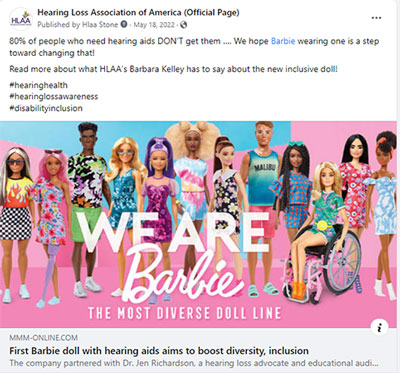
HLAA Barbie Facebook post

HLAA’s original Facebook post in May 2022 sharing an article that featured an interview with Executive Director Barbara Kelley about hearing aid Barbie.

Although hearing-aid Barbie doesn’t make an appearance in the movie—that would’ve been double nirvana—we’re riding the wave of even the indirect attention and lessons she brings. HLAA would like to see hearing health awareness rise to the level of wearing sunscreen and seatbelts. Decades ago, those safety measures were also not mainstream habits, but now are commonly adopted.

Besides Barbie, hearing loss has made a lot of news lately, with the opening of the over-the-counter (OTC) hearing aid market in October 2022—an event that brought millions of media impressions. It got people talking about the prevalence and common signs of hearing loss, and potentially easier to obtain treatment options. Other recent pop-culture phenomena, like CODA’s Best Picture win, Paul Simon revealing his own single-sided deafness, the young Emmy-nominated actor who is deaf and the new Golden Bachelor with visible hearing aids, all collectively help raise awareness of hearing loss—a positive step for all of us.

A prevailing theme of the Barbie movie is that sameness doesn’t work—the all-Barbie world was caught in misconception and the all-Ken world was chaotic and violent. The usual criticisms will abound, but I take away a message of diversity and celebrate as the clicks on our post climb. Although we don’t see it in the film, we know there is a Barbie who revels in acknowledging and treating her hearing loss, and kids now have more opportunity to see a range of disabilities reflected in the dolls they use to imagine their futures.


Meredith Resnick

By Meredith Resnick, Director of Strategic Communications, Hearing Loss Association of America

Enjoyed this post? Never miss out on future posts by following us.


Get the latest news and updates from HLAA

This field is for validation purposes and should be left unchanged.
First Name(Required)

HearingU Webinars

HLAA regularly hosts webinars on a variety of hearing wellness topics. View the upcoming schedule or watch a previous video.

Watch a Webinar


Follow HLAA on our social channels


If you or someone you know has a hearing loss, visit hearingloss.org for resources.

Find a local chapter or Walk4Hearing near you.

For questions, contact HLAA at inquiries@hearingloss.org.