
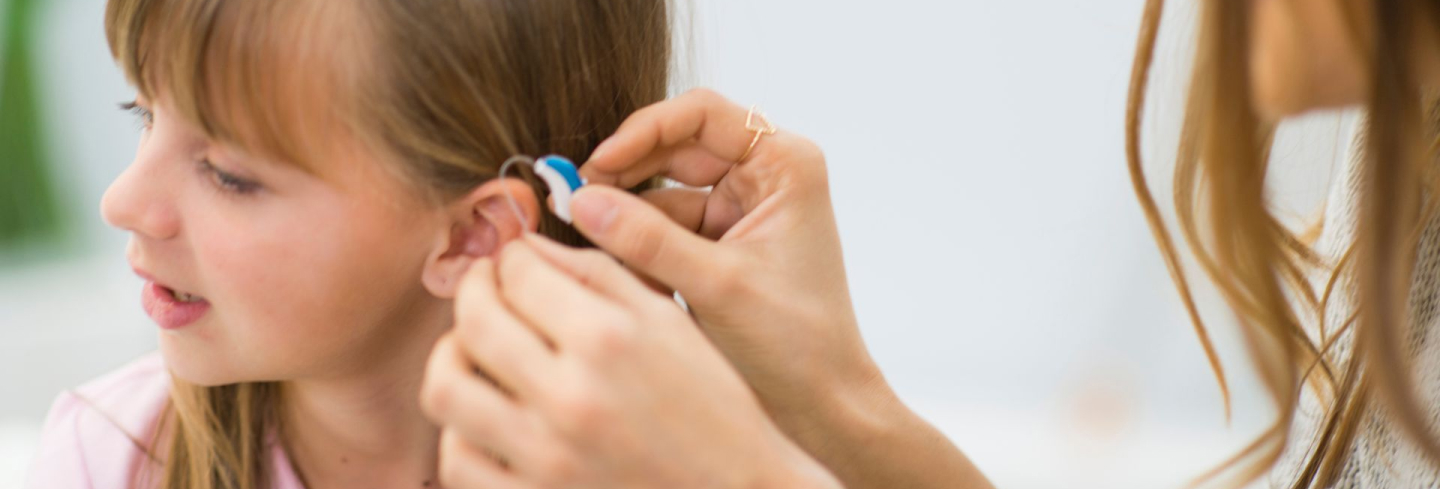
Hearing Loss Affects More Than Your Ears
As a psychologist with severe hearing loss, I often find myself reflecting on how it has impacted both my own life and the lives of my clients. Often, people erroneously assume that hearing loss is purely a medical diagnosis that only affects the ears. Actually, hearing loss is a complex interplay of social, cognitive and emotional factors that can significantly impact a person’s quality of life.
In the United States, hearing loss is the third most common chronic health condition, twice as prevalent as diabetes or cancer. Like many other conditions, hearing loss is on a spectrum that can range from mild to profoundly deaf—and affects every person differently. Even a mild hearing loss can have an impact and often progressively worsens over time. Whether from birth or acquired later, having a hearing loss requires learning new ways to adapt personally and navigate the hearing landscape.
Mental Health, Self-Identity and Hearing Loss
Many doctors and audiologists may only address the physical aspect of hearing loss without recognizing its psychological impact. However, hearing loss is primarily a communication disability that affects every aspect of personality, mental health and interactions with family, friends, relationships, co-workers and society at large. The daily effort to understand conversations, music or professional meetings can lead to a constant state of stress—from the frustration of asking people to repeat themselves, to the embarrassment of misunderstanding conversations, to the fear of missing out (FOMO) on the punchline or important information.

A concerned wife comforts her husband who is struggling with the emotional affects of hearing loss. (Deposit Photos)
Due to such communication challenges, hearing loss is often associated with a higher risk of anxiety, depression, withdrawal and isolation, particularly in older adults. Many people with this invisible disability also find themselves “in between” the hearing and non-hearing worlds, which leads to a sense of not belonging. For example, my client Marco—a 28-year-old photographer who was born deaf—is in therapy for loneliness and isolation. Raised with an oral approach that involved speaking, he never learned sign language. Thus, Marco feels unsupported socially, as he doesn’t seem to fit into either the hearing or deaf community.
People who lose their hearing as adults typically experience an identity crisis as their sense of competence and self-esteem plummet. About 10 years ago, I worked with Jeffrey, a cancer survivor who had lost his hearing after a second round of chemotherapy. An addiction counselor, Jeffrey wondered if he would ever be able to interview clients again, which was a critical part of his work, and realized that his identity as a professional was radically impacted. To regain his confidence, he first needed to grieve and then become more accepting of his loss. Jeffrey had to learn that his hearing loss was only a part of who he was and that it didn’t define him or his work as he learned strategies to help him communicate effectively.
Understanding the Impact of Hearing Loss
Several assumptions inform my communication with others in the hearing world: First, I assume that they know little, if anything, about hearing loss. Second, I realize most people are embarrassed about asking how to best communicate with me, because they think they should know. Telling them what I need up front lowers their stress and mine, too! Lastly, I must be patient with them and myself, which often means repeating my accommodation requests, such as: “Please face me” or “I can’t see your mouth when you cover it.”
A useful analogy I often use to help people understand the complexity of hearing loss is to compare it with low vision. A person who wears glasses doesn’t need to explain their condition, and they may use their glasses for specific situations, like for reading or distance. They can easily explain what their vision is in finite numbers, e.g., 20/80. In contrast, hearing loss is an invisible disability that encompasses a multitude of factors and variations such as frequency, pitch, word discrimination and volume. Even for seasoned hearing aid or cochlear implant (CI) wearers, trying to explain the intricate interplay of all these factors can be confusing and difficult.
Unlike corrective lenses that may, in many cases, restore one’s vision, hearing loss can never be fully restored, even with hearing aids or an implant, and is more subjective. One’s identity might even change between different environments; for instance, am I “hard of hearing” when speaking to someone or “deaf” when I’m at a restaurant or movie theater?
Learning to Cope and Self-Advocate
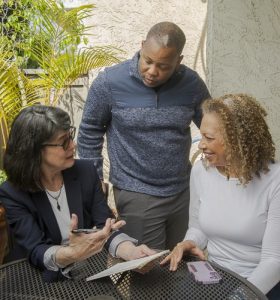
Alison Freeman, Ph.D., discusses hearing loss self-advocacy with Malik B. El-Amin and Ramona Lee at an HLAA Los Angeles Chapter meeting.
The onset or progression of hearing loss can often lead to personality changes. Several studies (here, here and here) have shown that adults with a new diagnosis of hearing loss can become introverted over time as they deal with the exhausting challenges of communication and having to constantly rely on hearing aids, technology and captioning. Conversely, I have found that the most effective way to reduce the psychological impact of hearing loss and successfully navigate the hearing world requires being more extroverted and proactively learning new coping skills—primarily self-advocacy.
Self-advocacy requires one to be more “out there”—if someone is an extrovert, who is comfortable with people and enjoys interacting with others, their adjustment will be easier than someone who is an introvert who prefers to be alone, is strongly independent and unlikely to seek emotional and social support.
My passion for teaching clients self-advocacy skills started long ago with Luisa, a client who became profoundly deaf from a serious case of meningitis eight years earlier. She was a severely depressed single mother who had two small children with whom she had a hard time communicating. I was appalled to learn that she had not been given any referrals or information about support resources (such as HLAA) or assistive technology by her doctors or audiologists to help adjust to her sudden deafness. She had no knowledge of the relay service, free captioned phones from the state or captioning apps on her computer and cellphone. She was truly isolated. However, her depression lifted significantly as she learned how to advocate for herself and use technology to communicate with friends and family more effectively.
Evolution Through Education
Successfully dealing with hearing loss is recognizing that stress is inevitable. More productive than trying to avoid stress is learning effective stress management and communication skills. This also means recognizing what is under my control, such as educating others about my hearing loss. I believe the more someone understands about my hearing loss, the more effective communication will be for both of us. That’s why I wear my “educator’s hat” every day when I meet new people or work with those who don’t know me well.
In reflecting on my own journey as an individual and a professional with hearing loss, I see that I’ve come a long way from trying to hide my disability from others. I’ve progressed from bluffing my way through conversations to self-advocating and becoming more comfortable with my limitations. Most importantly, I recognize and emphasize my strengths.
I love being able to share what I have learned in the hope of making another person’s journey less painful. I’m honored to be a guide as they transform the roadblocks of anxiety and depression into confidence and self-advocacy.

Alison Freeman, Ph.D., is a clinical psychologist who works half-time at California State University at Northridge (CSUN) counseling students with and without hearing loss. She has had severe hearing loss since early childhood, was orally trained and is a long-time member of HLAA. Dr. Freeman has developed mental health service programs in several counties and did her post-doctorate fellowship at the University of California, San Francisco (UCSF) Center on Deafness. She also has a private practice providing therapy, assessment, consultation and expert witness services. Email her at dralisonfreeman@gmail.com or visit her website: dralisonfreeman.net.
Names and details of clients mentioned have been changed to protect their privacy.
For more resources on this topic, including our HLAA HearingU webinar, “Beyond Your Ears: The Wider Impact of Hearing Loss,” visit “The Emotional Side of Hearing Loss” web page.
Dr. Freeman’s blog post, “Hearing Loss Affects More Than Your Ears,” was originally published as the cover article in the HLAA Hearing Life magazine spring 2025 issue. Read her previous cover feature from the summer 2023 issue, Back to School with Hearing Loss.
Content in all HLAA publications and channels is intended for informational purposes only. For medical advice or diagnosis, or for mental health support, please consult a professional.
Want to be notified of future posts? Follow our blog.
Get the latest news and updates from HLAA
HearingU Webinars
HLAA regularly hosts webinars on a variety of hearing wellness topics. View the upcoming schedule or watch a previous video.
Follow HLAA on our social channels



If you or someone you know has a hearing loss, visit hearingloss.org for resources.
Find a local chapter or Walk4Hearing near you.
For questions, contact HLAA at inquiries@hearingloss.org.







 Hearing loops are user-friendly assistive listening systems that offer easy, immediate, discreet communication access and universal hearing aid compatibility.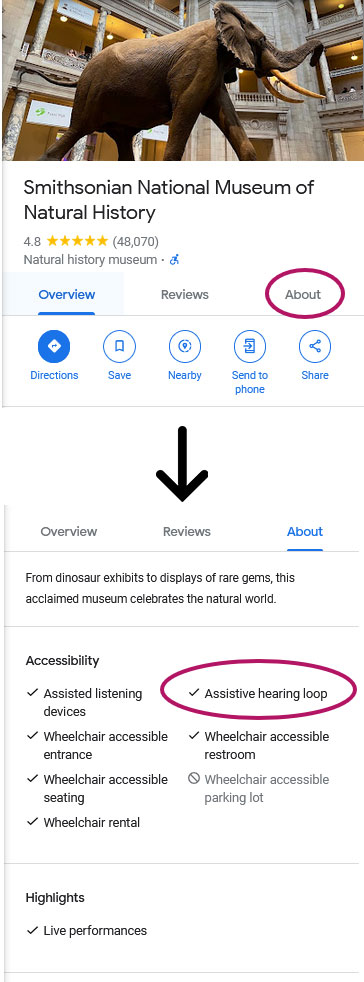
 Help spread the word that hearing loops are now on Google Maps. Tell your friends, family and your local venues:
