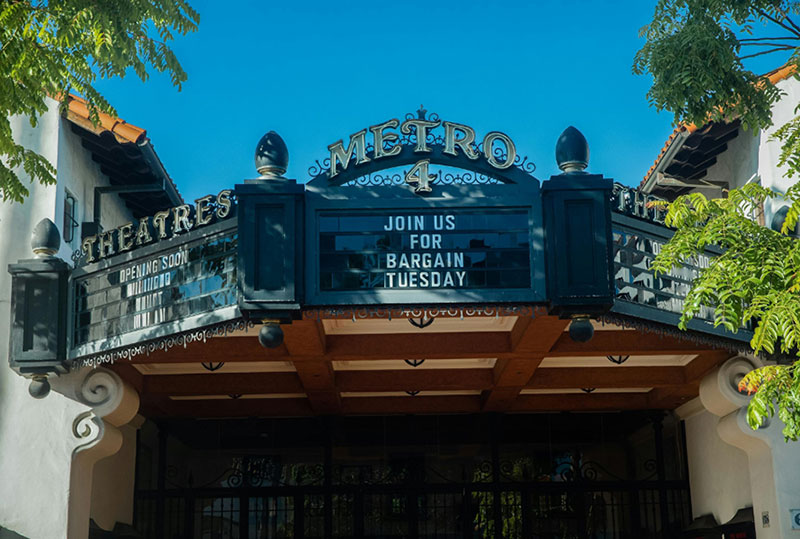
That’s why accessibility advocates across Virginia, including HLAA members, pushed for a better solution: open-captioned movie screening requirements via the passage of HB 602. Their efforts paid off. The bill passed and, since July 1, 2026, Virginia requires movie theaters with five or more locations in the state to offer open-captioned showings for widely-shown films, helping more people share the moviegoing experience with family and friends.
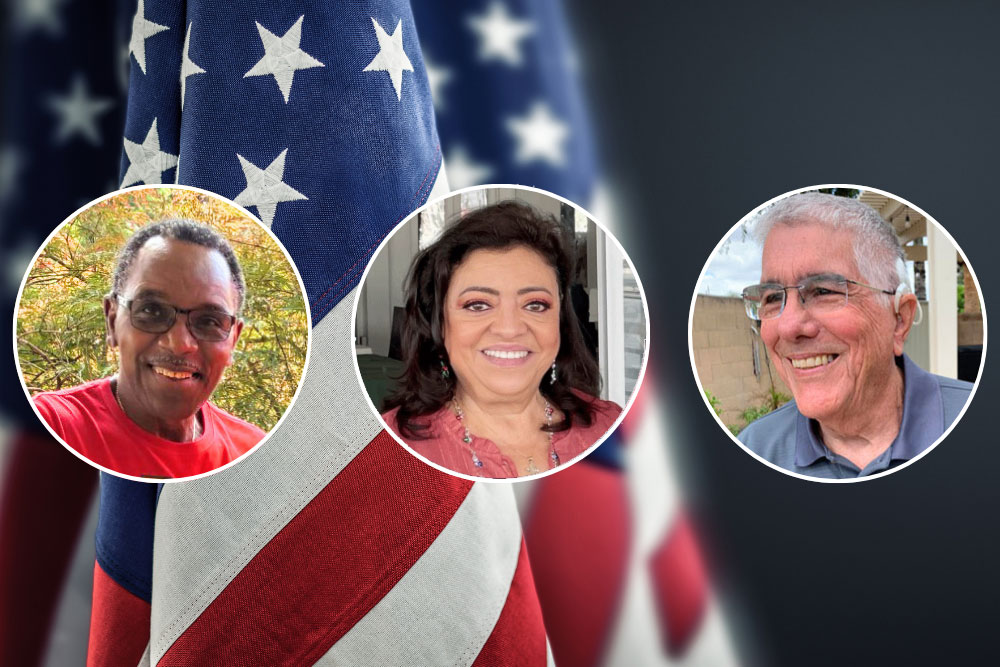
“My husband Ken has hearing loss,” says Claire Fornsel, co-vice president of the HLAA Virginia Beach Chapter. “In the past, he would go along to movies he couldn’t hear, just because he loves me. Now, with the passage of the Virginia movie theater open captioning legislation, we can enjoy the entertainment together.”
Open captions display dialogue and important sound cues directly on the movie screen, allowing everyone in the audience to see them. Unlike closed-captioning devices for individuals, they don’t require special equipment that can be lost, broken or just plain awkward.
HB 602 also improves public awareness of when open-captioned showings will happen. Theaters must now clearly label these viewings with an “OC” designation and provide information about how patrons can request open captioning later in a film’s run.
All of these changes combine to empower people with hearing loss—or anyone else who enjoys open captioning—to make plans with the same confidence as anyone else. It replaces uncertainty with inclusion, dignity and equal access.
 This legislation was championed by Delegate Phil Hernandez of the 94th District, who was approached in August 2025 by an accessibility advocate inspired by successful open caption policies in other states. Hernandez, whose sister is deaf, embraced the effort as part of his broader commitment to making Virginia more accessible for everyone.
He sought support and guidance from Neil Snyder, HLAA’s director of public policy, and accessibility-focused organizations such as Access Virginia and the Virginia Department for the Deaf and Hard of Hearing (VDDHH). The bill was introduced in January 2026, quickly passed both legislative chambers and was signed into law on April 6, 2026, by Governor Abigail Spanberger.
The measure benefited from grassroots advocacy by members of the HLAA Virginia Beach, Virginia Peninsula and Greater Richmond Chapters. Kenneth Reichert, president of the HLAA Virginia Beach Chapter and a 30-year U.S. Navy veteran with service-connected hearing loss, spoke publicly about the need for accessible movie experiences at a town hall event held by Del. Hernandez. Other HLAA members throughout Virginia, including chapter leaders Angela Hill, Kathy Richter, Keith McAllister, Claire Fornsel, Richard Wiltse, Bobby Graves and Larry Herbert, reached out to state lawmakers urging support.
Their success demonstrates how local advocates can drive meaningful change when they collaborate with legislators and community organizations.
Left to right: Claire Fornsel, co-vice president, HLAA Virginia Beach Chapter; Tiago Campos, Access Virginia board member; Delegate Phil Hernandez; Jane Popkin, president of Virginia Hearing Loss Support Network; Lois Boyle, executive director of Access Virginia; and Ken Reichert, president, HLAA Virginia Beach Chapter, at a town hall event in Norfolk, VA.
The positive effects of this new law will reach far beyond people with hearing loss. As Claire’s experience shows, people who may not need open captions themselves can now share the experience with friends and loved ones who do.
“Imagine grandparents taking their grandchildren to see the latest Disney or Pixar film,” says her husband Ken Reichert. “In the past, hearing loss might have made the outing frustrating or even impossible. With open-captioned screenings, the whole family can enjoy the film together without the need for specialized equipment.”
In addition, viewing movies and videos with captions can reinforce literacy skills in school-age children whether or not they have hearing loss, by connecting spoken words with text in real time. (And English-language learners often use captions to strengthen language comprehension.) Advocates also note that many younger viewers already prefer watching content with captions turned on, regardless of hearing ability.
With this success, Virginia joins a growing movement that includes Hawaii, Maryland, Washington, D.C., New York City and Washington State, all of which have adopted open-captioning regulations. Each victory smooths the path for other jurisdictions to follow.
And for advocates across the country, these wins serve as a powerful reminder that meaningful change often begins when community members speak up and work together.

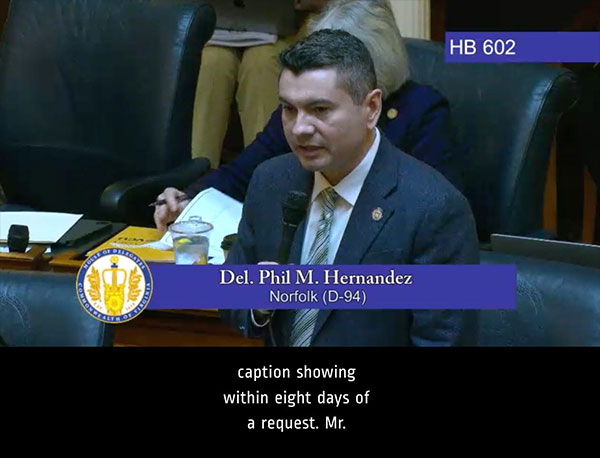 This legislation was championed by Delegate Phil Hernandez of the 94th District, who was approached in August 2025 by an accessibility advocate inspired by successful open caption policies in other states. Hernandez, whose sister is deaf, embraced the effort as part of his broader commitment to making Virginia more accessible for everyone.
 “Imagine grandparents taking their grandchildren to see the latest Disney or Pixar film,” says her husband Ken Reichert. “In the past, hearing loss might have made the outing frustrating or even impossible. With open-captioned screenings, the whole family can enjoy the film together without the need for specialized equipment.”