Veterans Across America Virtual Chapter Meeting

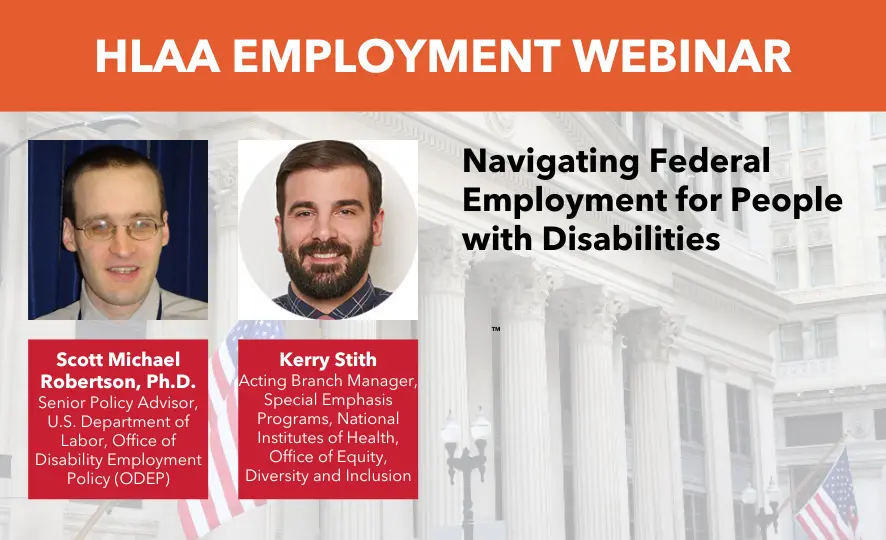
The federal government offers people of all backgrounds, including people with disabilities, opportunities to have a meaningful career in public service. In this webinar, attendees learned about pathways to federal service for people with disabilities, strategies for effectively navigating the federal workplace and resources from the Office of Disability Employment Policy.
 Scott Michael Robertson, Ph.D.
Senior Policy Advisor, U.S. Department of Labor, Office of Disability Employment Policy (ODEP)
Scott Michael Robertson, Ph.D., is an autistic adult and a senior policy advisor in the Office of Disability Employment Policy in the U.S. Department of Labor (DOL). He spearheads ODEP’s $3.8 million Partnership on Inclusive Apprenticeship (PIA) in his role as the federal project manager. Dr. Robertson also advances work to propel support for neurodiversity in workplaces and improve access to gainful employment and career paths for job seekers on the autism spectrum. He serves as a key subject matter expert for ODEP’s $2.1 million project on Research Support Services for Employment of Young Adults on the Autism Spectrum.
Before joining ODEP, Dr. Robertson served as a Joseph P. Kennedy, Jr. Fellow in the U.S. Senate Committee on Health, Education, Labor and Pensions. He also served as the founding vice president of the Autistic Self Advocacy Network (ASAN), a national nonprofit organization based in Washington, D.C. Dr. Robertson earned his Ph.D. in information sciences and technology at Penn State University. In 2021, DOL awarded him and his colleagues a Secretary of Labor’s Exceptional Achievement Award for work to help foster inclusive apprenticeships. The Viscardi Center in New York awarded him a Henry Viscardi Achievement Award for exemplary global leaders who drive work to empower people with disabilities. He is also an inductee of the national Susan M. Daniels Disability Mentoring Hall of Fame and a recipient of a Jay S. Drotman Award from the American Public Health Association for emerging leaders in health policy and practices.
 David Rice
Acting Branch Manager, Special Emphasis Programs, National Institutes of Health, Office of Equity, Diversity and Inclusion
David Rice graduated in 2009 from Catholic University of America with a degree in psychology, with a focus on social stigmas of people with Intellectual Disabilities. He has been at National Institutes of Health (NIH) since October 2009, where he is currently serving as the acting branch director for the Special Emphasis Programs. Being deaf since the age of four, he has a strong interest in Disability Community.
His work within the disability community started as a sophomore in high school, where he worked summer camps for children with intellectual and physical disabilities. While in college he was part of the first American Sign Language (ASL) program, where students live a dorm in which hearing and deaf students shared their desire to learn ASL. He was also active in outreach for people with disabilities at Catholic University.
David served as President of DIG (Deaf in Government) from 2014 to 2018. DIG empowers deaf and federal employees with hearing loss to overcome communication barriers, resolve accessibility issues and promote a fully inclusive work environment through networking and fostering professional growth. Some of David’s accomplishments are initiating a workforce complaint program, developing a training program that fosters promotion in the federal government, establishing partnerships with different organizations and creating networking and mentoring opportunities.
David has also changed the cultural stigma placed on people with disabilities by changing the NIH mission statement. He led the DeafNIH Employee Resource Group at NIH for those who are people with hearing loss, by working closely with the Office of Equity, Diversity and Inclusion (EDI). David was also a part of Section 508 Advisory group whose mission is to make the internet a fully accessible environment; with his focus being on closed captions. In his spare time, David enjoys baseball and all things Pittsburgh.
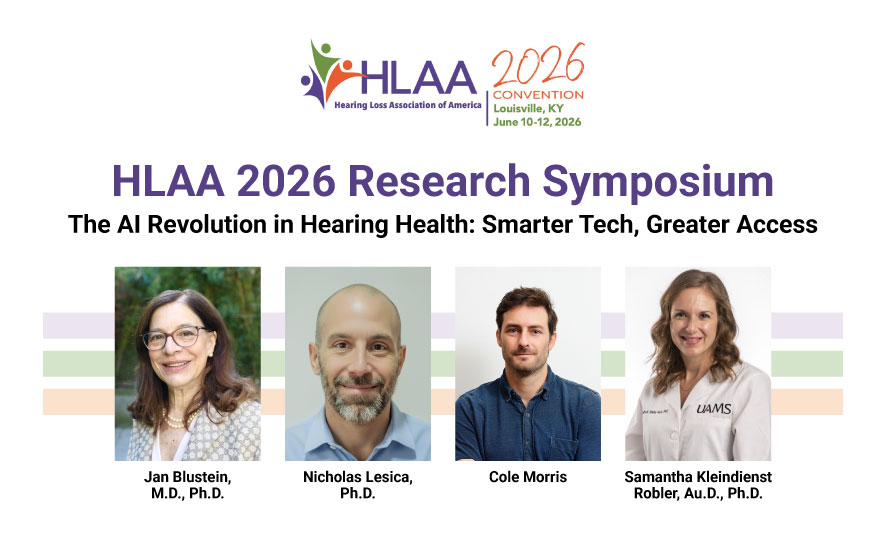
The HLAA 2026 Research Symposium explores how AI is revolutionizing hearing health care, improving speech in noise, screening, diagnosis and treatment access.

Watch HLAA Executive Director Barbara Kelley and top hearing care experts discuss evolving technology, key innovations and informed choices in hearing care.
Your feedback matters! Use this form to educate venues and event organizers about whether their assistive listening offerings are effective.

A simple guide for what to do before, during and after an event to make sure you get the best listening experience from an event or venue.

A simple chart explaining which devices can connect to different assistive listening systems.
Two behavioral health experts examine how stigma may prevent people with hearing loss from prioritizing their mental health and substance use issues.
Learn how hearing loss shapes workplace identity, disclosure and tech use—plus insights from HLAA panelists on building inclusive workplaces.

Learn how to create more inclusive workplaces and navigate fast-moving, high-noise environments from our panel of professionals with hearing loss.
A professional panel discusses how Auracast broadcast audio may impact listening in public spaces and why hearing loops remain essential assistive technology.