2026 Arizona Walk4Hearing


Many people are faced with this question in their job or search for employment. Whether you disclose hearing loss before an interview, after an offer, or once you’re on the job depends on your communication needs, the role, and what will help you succeed. In this article, I share my experiences with disclosure, valuable lessons I’ve learned, and a more empowering question to ask instead.
During a job search last year, I reached the final round of interviews for a position I was excited about. The four-hour interview process included in-person and virtual meetings.
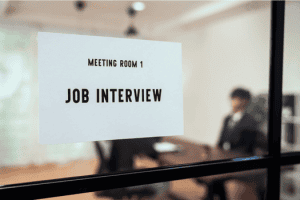
Before the interview, I disclosed my hearing loss to the recruiter, asking questions about the room setup and seating arrangements. She was incredibly helpful. She moved the interviews to a small conference room so I could sit directly across from each interviewer and ensured that captions were available during the virtual session. I felt supported and prepared.
In one interview that day, the hiring manager mentioned that staff regularly ate lunch together in the building’s atrium. When I saw the space with its crowded tables, hard floors, and high ceilings, I knew immediately it would be a difficult listening environment. I decided to tell him about my hearing loss and explain that group lunches might be challenging, but that I’d do my best.
Maybe I imagined it, but I sensed some hesitation on his part. In any case, I did not get the job, and I’ll never know if that conversation had anything to do with their decision. What I do know is that I disclosed my hearing loss twice during that interview process, and the experiences felt very different. One created support, the other created uncertainty.
People often ask when they should disclose their hearing loss to an employer or potential employer. On the application? During the interview? After receiving an offer?
The Americans with Disabilities Act (ADA) and the Equal Employment Opportunity Commission (EEOC) provide important protections around disability disclosure and accommodation during the hiring process. But while the law establishes boundaries, it does not address what most people want to know: “What should I actually do?”
After more than 25 years living with profound hearing loss, I still don’t have a simple answer. Disclosure is rarely a single event. It can happen every time we ask for captions in a meeting, introduce ourselves to a new colleague, attend a networking event, or ask someone to repeat themselves.
The environment around us is also a factor. Does it feel welcoming, accessible, and safe to disclose? The culture, leadership, and accessibility of a workplace can all influence whether disclosure feels like a reasonable choice or a risk.
Employers are ultimately trying to answer a simple question: “Can this person do the job?”

During my employment search, I chose not to disclose my hearing loss on the initial application. I wanted my experience and qualifications to make it through the initial screening—whether that first review was by a recruiter or artificial intelligence (AI). I wanted my skills to make people notice me before my hearing loss did.
Once I made it to an interview, I decided when disclosure made the most sense based on what I needed. If I required an accommodation to participate fully in the interview, I chose to disclose beforehand. More often, I waited until the final rounds, when I had already had an opportunity to demonstrate my qualifications.
At that point, my hearing loss could actually become part of the conversation about my strengths in a positive way. I could share how I’ve solved problems, navigated communication challenges, the strategies I’ve developed to succeed, and the resilience and adaptability I’ve gained along the way. My experience with hearing loss has also given me a better understanding of how people communicate and what others may need to participate fully.
What makes disclosure so complicated isn’t simply fear of discrimination; it’s the constant decision-making. In every new interaction, I’m quickly weighing questions in my mind, such as: “Will disclosure improve communication? Do I have the energy to explain my hearing loss today? How might this person react? Will I even see them again?” That invisible mental calculus creates an added layer of work most people never see.
Sometimes disclosure feels unnecessary. If I’m talking to someone I’ll likely never meet again, sharing about my hearing loss can feel like more effort than it’s worth. But if I don’t explain, people may assume I’m distracted or rude. I’ve realized over the years I’d rather people know I’m deaf than draw the wrong conclusion about me. Disclosure thus became a way to control my own narrative, rather than let others create it for me.
One strategy that has helped is being ready with a few simple sentences explaining about my hearing loss and what I need. I’ve found that when I discuss my hearing loss comfortably and dir class=”headers”ectly, many people respond with similar comfort and openness.
 Another lesson I’ve learned is that disclosure doesn’t have to mean telling everyone. Sometimes one ally is enough. During that four-hour interview, it was the recruiter, who made sure I had the accommodations I needed to interview at my best. At my current job, it’s the person who coordinates meetings, makes sure the microphone is working, and enables captions. That relationship has made a significant impact in my day-to-day work experience.
When people ask me when they should disclose their hearing loss at work, they’re usually looking for certainty: a rule, the perfect timing, or the right person to tell. Unfortunately, that certainty doesn’t exist. So, I’ve stopped asking, “When should I disclose?” Instead, I ask myself, “What do I need in this situation to succeed?”
Disclosure is no longer about revealing my disability, but about revealing what I need to better communicate, participate, and do my best work. That doesn’t always make disclosure easier, but it does make it feel intentional—and sometimes even empowering.

Lisa Yuan is a senior communications specialist at the Mayo Clinic and previously worked at the National Institutes of Health (NIH). A cochlear implant recipient, she serves on the HLAA Task Force for Accessible, Inclusive Employment and has held leadership roles in several HLAA Chapters. Lisa was recognized with the Spirit of HLAA Award in 2018. She can be reached at leesayuan@gmail.com.
Enjoyed this post? Never miss out on future posts by following us.
HLAA regularly hosts webinars on a variety of hearing wellness topics. View the upcoming schedule or watch a previous video.



If you or someone you know has a hearing loss, visit hearingloss.org for resources.
Find a local chapter or Walk4Hearing near you.
For questions, contact HLAA at inquiries@hearingloss.org.
A new law in Hawaii will lead to the development of a State Plan on Hearing Loss to address vital hearing healthcare needs and close service gaps.
Advocacy Chapters Hear This! Blog
Learn how to report missing, inaccurate or out of sync television captions with the Federal Communications Commission (FCC).
Accessible Communication Advocacy Hear This! Blog
Discover how Title III of the ADA ensures equal access and effective communication through assistive listening systems in places of public accommodation.
Accessible Communication Advocacy Hear This! Blog
Virginia’s new law requires movie theaters to offer open-captioned screenings, making cinema more accessible for viewers with hearing loss.
Advocacy Hear This! Blog
A prominent battery manufacturer makes an important, senior-friendly accessibility update to its hearing aid battery packaging.
Advocacy Hear This! Blog
After delaying eight years to treat her hearing loss with a cochlear implant, Teri wishes she had done it sooner; read HLAA's third inspiring CI Day story.
Chapters Hear This! Blog Success Stories
Qais Khan is a passionate advocate for young adult cochlear implant recipients—read the second of HLAA's three inspiring stories for CI Day.
Advocacy Hear This! Blog Success Stories
Read about Doni, a young cochlear implant recipient, and his family in the first of three inspiring stories for International Cochlear Implant Day.
Hear This! Blog Success Stories
Flying for the holidays with hearing loss? Check out our 8 essential travel tips, advocate for your rights and learn a new way to file complaints.
Advocacy Hear This! Blog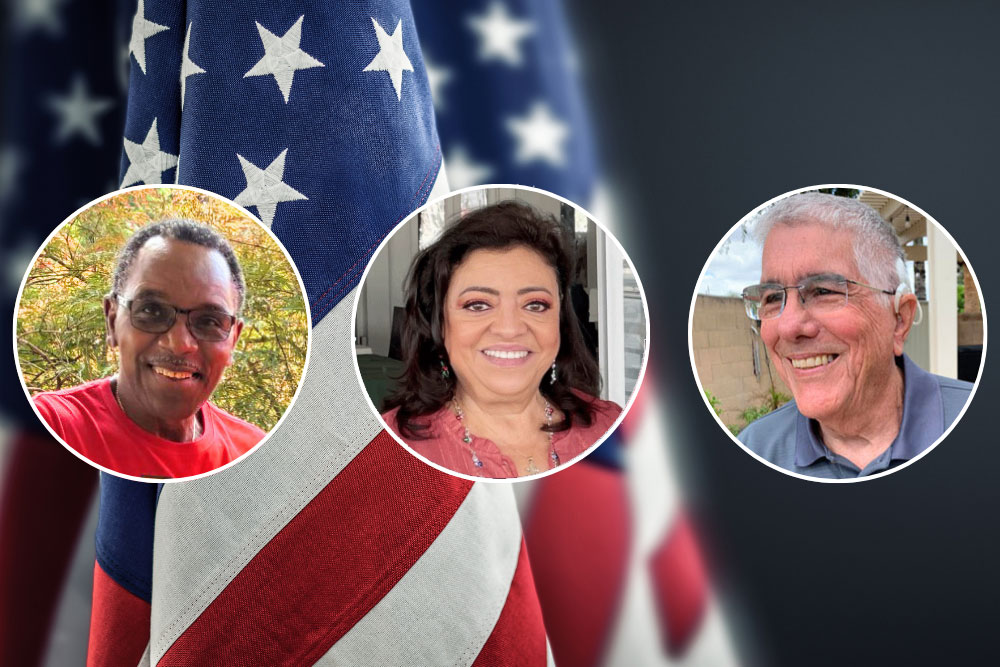
Read the inspiring stories—and advice—of three military veterans with service-connected hearing loss who are HLAA Chapter leaders.
Chapters Hear This! Blog Success Stories
Four members of the HLAA Task Force for Accessible, Inclusive Employment share career insights and workplace strategies for people with hearing loss.
Employment Hear This! Blog Technology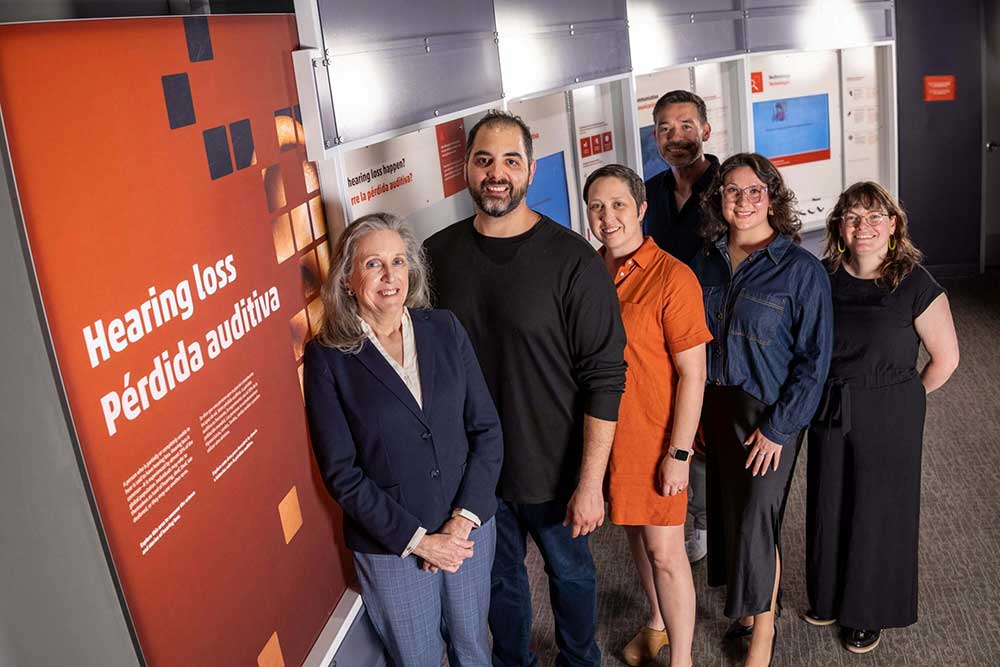
A groundbreaking exhibit on hearing loss at Boston's renowned Museum of Science was developed with involvement from a local HLAA Chapter.
Chapters Hear This! Blog Success Stories